BLOG

What Is Industrial Shrink Wrap and How Does It Work?

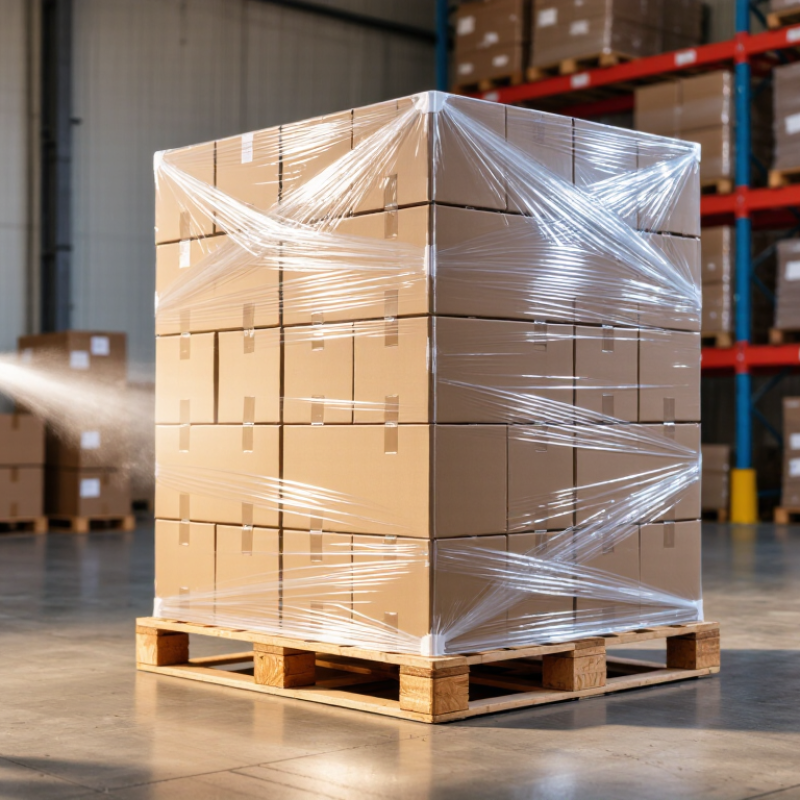
Industrial shrink wrap is more than transparent plastic around a pallet. It is a controlled packaging system for stabilizing, protecting, and presenting products during handling and storage. The film tightens when heat activates its polymer memory. As it contracts, it follows the load’s shape and creates a firm outer layer.

Packaging educator Walter Soroka describes packaging as “a coordinated system of preparing goods for transport, distribution, storage, retailing, and end use.” His definition explains why industrial shrink wrap requires more than choosing thick film. Operators must consider load weight, product edges, humidity, warehouse temperature, and transportation vibration. A packaging engineer may select polyethylene film for heavy pallets, while polyolefin film may suit smaller bundled products. The wrong choice can cause tearing, loose wrapping, or trapped moisture.

The working process is practical. Products are arranged on a pallet. Film is wrapped around the load, then heated with a shrink tunnel, hood, or handheld tool. Heat reduces the film’s dimensions. The result is a tighter package with fewer exposed surfaces and improved unit stability.

Still, shrink wrap is not magic. Uneven heat can leave wrinkles. Excessive heat can damage sensitive goods. A tiny puncture may grow during transport. Experienced operators inspect corners, seals, tension, and pallet movement before approving a load. Industrial shrink wrap performs well when film design, equipment settings, and handling practices work together. This article explains that process, its advantages, its limitations, and the practical decisions behind reliable shrink packaging.
What Is Industrial Shrink Wrap and How Does It Work?

Definition and Purpose of Industrial Shrink Wrap

Industrial shrink wrap is a plastic film used to secure, protect, and stabilize products during storage or transport. Unlike stretch wrap, it contracts when exposed to controlled heat. This creates a tight covering around cartons, equipment, pallets, or irregular loads. The film helps reduce dust, moisture exposure, scuffing, and shifting. It can also bundle several items into one manageable unit. Industrial shrink wrap is not merely a cover. It acts as a temporary protective barrier and a load-control layer.

The process usually involves placing film around the product, sealing the edges, and applying heat with suitable equipment. As the film warms, it pulls inward and follows the product’s shape. Film thickness, temperature, airflow, and sealing quality all affect the result. Too much heat can create holes or weak seams. Too little heat leaves wrinkles and loose sections. No wrap system is perfect. Operators should inspect corners, contact points, and the underside of pallets, where failures are easy to miss.

Tips: Choose film strength based on load weight and sharp edges. Use corner protection for fragile cartons. Keep heat settings consistent, then test one wrapped unit before full production. Avoid sealing trapped moisture inside the package. Record film type, temperature, and defects during routine checks; this simple record often reveals problems faster than guesswork.

Materials and Forms Used in Industrial Shrink Wrap

Industrial shrink wrap is a heat-responsive plastic film used to stabilize and protect large products during storage or transport. Polyethylene is common for heavy loads because it offers strength, moisture resistance, and useful puncture protection. Polyolefin provides clearer presentation and cleaner sealing for smaller industrial items. PVC can shrink tightly, but its use depends on workplace requirements and ventilation controls.

The material appears in several practical forms. Rolls suit irregular loads and allow operators to cut the required length. Centerfold rolls open around products before sealing. Shrink tubing creates a sleeve around long items, while shrink bags fit prepared products with less manual cutting. Flat sheets and preformed covers are useful for pallets, machinery, and bulky equipment.

Heat activates the film’s memory. A controlled heat gun or shrink tunnel softens the polymer, and the film contracts around the load. Good results depend on film thickness, shrink ratio, sealing quality, and even heat distribution. The surface should feel firm, not scorched.

Small details matter. Sharp corners may need protective pads. Trapped moisture can remain hidden beneath the film. A tighter wrap is not always better. Excessive heat can weaken seams, distort sensitive parts, or create holes. Operators should test a small section first and inspect the finished package under normal handling conditions. One overlooked issue is recycling: mixed films, labels, and contamination can limit recovery options.

What Is Industrial Shrink Wrap and How Does It Work? — Materials and Forms Used in Industrial Shrink Wrap

Material or Form Typical Structure How It Shrinks or Secures Key Properties Common Industrial Uses Important Considerations
Polyethylene (PE) Film Single-layer or multilayer film; commonly produced as low-density or linear low-density polyethylene. Usually shrinks when heated with a heat gun, shrink tunnel, or other controlled heat source. High tear resistance Good puncture resistance Suitable for heavy loads Bundling building materials, protecting machinery, wrapping pallets, covering outdoor products, and securing large or irregular loads. PE generally provides stronger mechanical protection than thinner retail films, but it may require more heat and equipment to achieve a tight finish.
Polyolefin (POF) Film Usually a multilayer film made from polyolefin resins. Shrinks in both the machine direction and transverse direction when exposed to controlled heat. Clear appearance Good puncture resistance Strong sealability Secondary packaging of packaged goods, components, food-related products, and items that require a clean, transparent presentation. Often selected where appearance and balanced shrink are important. It is generally not the first choice for very large, extremely heavy, or highly abrasive loads.
Polyvinyl Chloride (PVC) Film Flexible PVC film supplied in rolls, centerfold formats, or preformed bags. Shrinks under heat and conforms closely to the shape of the packaged item. Good clarity Tight finish Easy processing Light-duty bundling, small components, printed materials, and products where visibility is important. PVC can release hydrogen chloride-containing fumes if overheated or burned. Adequate ventilation and temperature control are essential.
Shrink Hood A large preformed bag or hood designed to fit over a pallet, machine, vehicle, or other oversized load. Heat is applied after the hood is positioned; the film contracts around the load and forms a protective enclosure. Large-load coverage Weather protection Reduced handling Outdoor storage, palletized goods, industrial equipment, construction products, and oversized machinery. Load dimensions must be measured accurately. Excess material can increase heat requirements, while insufficient material can leave exposed areas.
Shrink Bag Presealed or open-ended bag sized to contain an individual product or grouped items. The bag is placed around the product and heated so that it contracts around the contents. Fast application Consistent coverage Tamper indication Parts, finished goods, hardware, electrical items, and products requiring individual protection. Bag dimensions and opening size determine loading speed and the quality of the final seal.
Shrink Tubing Continuous tubular film supplied on a roll; the product is inserted through the tube and the ends are sealed or cut. Heat reduces the tube diameter around the product while end seals close the package. Efficient for long products Reduced film waste Adjustable length Long components, profiles, pipes, furniture parts, and products with consistent cross-sections. The tube width should accommodate the product perimeter while allowing enough material for sealing and shrink movement.
Centerfold Film A continuous film folded lengthwise, creating two connected layers with an open side for product insertion. The product is placed between the layers, the open edges are sealed, and heat contracts the film. High throughput Compatible with automation Consistent wrapping Automated or semi-automated wrapping of cartons, panels, bundles, and regularly shaped products. Film width and product height must be matched to avoid excess material, incomplete coverage, or difficult sealing.
Shrink Sleeve A tubular sleeve placed over a product, container, component, or grouped package. Heat causes the sleeve to contract tightly around the underlying surface. Conforms to contours Full-surface coverage Can provide labeling Containers, shaped components, grouped products, and applications requiring a close-fitting outer layer. Sleeve diameter, shrink ratio, and heat distribution affect wrinkles, distortion, and final fit.
Heavy-Duty Reinforced Film Thicker PE-based film, sometimes reinforced with mesh or other structural layers. Heat causes the film to tighten, while the reinforcement helps maintain load containment. High tensile strength Improved puncture resistance Suitable for demanding loads Steel products, lumber, concrete products, industrial machinery, and large palletized loads. It may require specialized heating equipment and careful heat control because thicker films need more energy to shrink evenly.
Perforated Shrink Film Shrink film containing controlled holes or microperforations. Heat contracts the film while the perforations allow trapped air to escape during shrinking. Improved air release Reduced ballooning Useful for porous loads Wrapping products that retain air, irregular bundles, and loads where trapped air could interfere with a tight package. Perforation size and spacing must balance air release with protection against moisture, dust, and contamination.
Typical Shrink-Wrapping Process Film selection, load preparation, film application, sealing, and controlled heating. The film is first positioned with enough slack for coverage. Heat then activates molecular relaxation in the oriented film, causing it to contract around the load. Protective enclosure Load stabilization Reduced exposure Unitizing products, protecting against dust and moisture, reducing movement during handling, and preparing goods for storage or transport. Correct film type, shrink temperature, heating speed, ventilation, and operator training are necessary for a secure and visually uniform package.

Note: Actual shrink performance depends on film formulation, thickness, orientation, shrink ratio, load geometry, equipment settings, and environmental conditions.

How Industrial Shrink Wrap Works Step by Step

Industrial shrink wrap is a polymer film that tightens around products after controlled heating. The process begins with film selection. Operators match thickness, shrink ratio, and puncture resistance to the load. Polyethylene suits heavy pallets, while thinner films suit cartons and grouped items. The packaging market is substantial. Smithers valued global packaging at about $1.17 trillion in 2022 and expects continued growth through 2028.

How Industrial Shrink Wrap Works Step by Step starts with product placement. Workers or machines center the load on a film sleeve. A sealer closes the open edges and creates a tight seam. Then comes heat. A shrink tunnel exposes the package to moving hot air, usually within a controlled temperature range. The film contracts across its width and length. It conforms around corners, gaps, and irregular surfaces. Cooling then stabilizes the package. ASTM D2732 is commonly used to measure free shrink, helping technicians compare film behavior before production.

Quality checks follow. Staff inspect seals, wrinkles, exposed corners, and trapped air. Excessive heat can thin the film or damage sensitive contents. Too little heat leaves loose panels and weak restraint. Smithers also identifies material efficiency and packaging automation as important industry priorities. That pressure can encourage thinner films, but thinner is not always better. A light film may reduce material use yet fail during transport. Small errors matter. Humidity, tunnel speed, and uneven loading can change results. Real production is less perfect than a machine setting suggests. Operators should record failures, adjust one variable, and test the finished load before wider use.

Equipment and Heat-Sealing Methods

Industrial shrink wrap is a polymer film that tightens around a product after controlled heating. In factories, equipment choice matters as much as the film itself. An L-bar sealer cuts and seals center-folded film around a load. A side sealer handles continuous products at higher speeds. The package then enters a heat tunnel, where circulating air shrinks the film evenly. Small temperature changes can create wrinkles, weak seals, or scorched corners.

Heat-sealing methods vary by film structure and production speed. Impulse sealing uses short electrical pulses, making it suitable for polyethylene and polyolefin films. Constant-heat sealing keeps heated jaws active and supports thicker industrial films. Operators should control dwell time, pressure, and temperature together. Too much heat is not better. It can reduce seal strength.

Testing should include visual checks, leak detection, and measured seal strength. ASTM F88/F88M provides a common method for testing flexible package seals, while ASTM F2029 covers heat-sealing practices. Grand View Research estimated the global shrink film market at approximately US$7.3 billion in 2023 and projected about 6.5% annual growth through 2030. That growth encourages faster equipment, but speed can hide poor calibration. In plant trials, a seal may look acceptable and still fail under vibration. A practical setup records film thickness, tunnel temperature, conveyor speed, and package weight. The process is rarely perfect. Rechecking those variables is often necessary.

Industrial shrink wrapping uses controlled heat to make polymer film contract tightly around a load. The chart shows typical lower and upper temperature settings for common film types; actual settings vary with film thickness, tunnel airflow, sealing equipment, and package geometry.

Industrial Applications, Benefits, and Limitations

Industrial shrink wrap is a polymer film that tightens around equipment, pallets, and exposed materials. Heat activates the film’s memory, drawing it close to the load. Cold shrink film uses tension and mechanical force instead. The result is a fitted protective layer. It looks simple. Installation is not always simple.

Factories use shrink wrap to cover machinery during storage, transport, and installation delays. Construction teams may protect steel frames, pipes, and oversized components from rain, dust, and salt air. Warehouses also wrap palletized goods for stability and cleaner handling. A well-fitted cover can reduce moisture contact, surface contamination, and abrasion from movement. It can also reduce the need for separate packaging materials. That matters in crowded work areas.

Industrial shrink wrap has limits. Poor surface preparation can trap moisture beneath the film. Excessive heat may damage sensitive coatings, wiring, or nearby materials. Sharp corners need padding, or they can puncture the cover during transport. Wind creates another risk, especially around large outdoor enclosures. Field checks should include seams, tie points, drainage areas, and signs of condensation. A qualified installer should select film thickness, ventilation, and fastening methods for the environment. One practical weakness is often overlooked: a tight cover can hide corrosion or leaks until inspection is delayed. Regular access points and documented inspections make the system more dependable, though they add labor and planning.

Go to Top