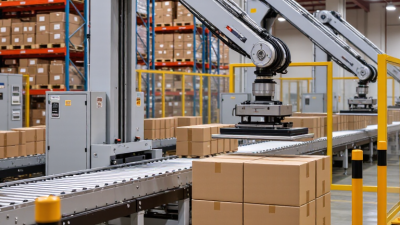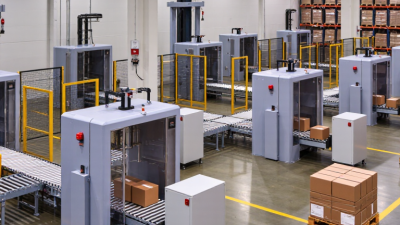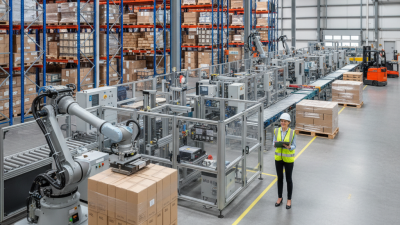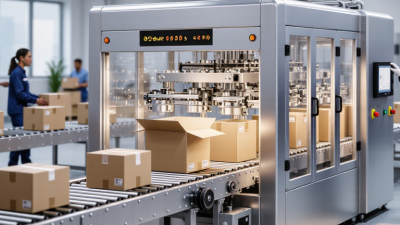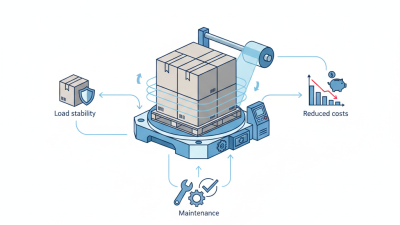
Global operations demand more than fast pallet stacking. They require stable performance across changing products, shifts, climates, and labor conditions. A top tier palletizer helps manufacturers manage these pressures with repeatable motion, accurate layer formation, and controlled product handling.
The International Federation of Robotics reported 541,302 industrial robots were installed worldwide in 2023 in its World Robotics 2024 report. This figure reflects a broader shift toward automated production, including end-of-line packaging. PMMI’s reports on packaging automation also identify labor availability, productivity, and equipment flexibility as major investment drivers. These findings matter on a busy warehouse floor, where a damaged carton or uneven pallet can delay loading, create rework, and increase safety risks.
Speed matters. Reliability matters more.
In practical operations, premium palletizing equipment can support higher uptime through recipe management, diagnostic systems, guarding, and integration with conveyors, stretch wrappers, and warehouse software. A well-designed system may also reduce repetitive lifting and provide consistent pallet patterns for long-distance transport. However, “top tier” should not mean selecting the most expensive machine automatically. The correct choice depends on throughput, case dimensions, pallet formats, sanitation requirements, local service coverage, and workforce capability.
That point deserves reflection.
A technically advanced palletizer can still underperform if operators lack training or spare parts arrive slowly. Experienced integrators therefore validate line speeds, test real products, and document maintenance procedures before commissioning. Manufacturers should review measurable evidence, including mean time between failures, changeover duration, energy use, and verified customer references. For global operations, dependable support and adaptable engineering often create more value than headline speed alone.
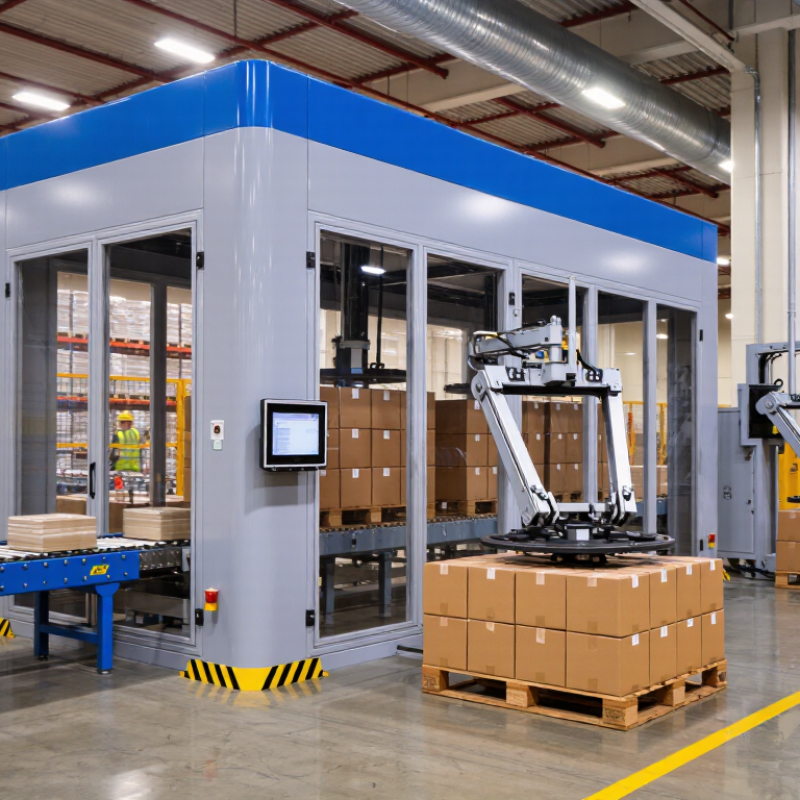
A top-tier palletizer is more than a fast robot beside a conveyor. It must manage different carton sizes, weights, patterns, and production speeds without constant adjustment. Reliable systems offer accurate motion, sturdy frames, adaptable grippers, and clear operator controls. They should also support recognized safety practices and documentation for different markets. That matters when one facility serves several countries.
Real-world experience exposes weak points quickly. Dust may reduce sensor accuracy. Humidity can affect packaging. A sudden product change can disrupt a perfect pallet pattern. A dependable palletizer allows recipe changes, controlled access, and quick maintenance. Remote diagnostics can help, but trained local technicians remain essential. No machine is perfect. Even a well-specified system may struggle when packaging varies more than expected.
Tips: Test the heaviest and lightest cases before approval. Measure aisle space, pallet height, and changeover time. Ask for performance data from similar applications. Keep spare wear parts available locally. Review safety procedures with operators, not only engineers. Small details often decide whether global equipment performs smoothly.
Advanced palletizing systems improve production efficiency through consistent motion, accurate stacking, and faster changeovers. Vision sensors can identify case orientation and detect damaged cartons before stacking. Servo-driven arms also reduce sudden impacts on fragile packaging. The gain is measurable. MHI’s 2024 Annual Industry Report identified labor shortages as a major challenge for 57% of supply chain professionals. Automated palletizing can reduce repetitive lifting while keeping trained employees focused on quality checks and line control.
The International Federation of Robotics reported 541,302 industrial robots installed worldwide in 2023. This growth reflects stronger demand for flexible automation across manufacturing and logistics. A capable palletizer should handle different case sizes, pallet patterns, slip sheets, and wrapping interfaces. Recipe-based controls can shorten product changeovers. Even a few saved minutes per changeover can increase daily output. Small faults multiply. Misaligned cartons, poor gripper settings, or uneven floors can stop an entire line.
Real efficiency depends on integration, not speed alone. Engineers should review conveyor timing, pallet supply, safety zones, and maintenance access before installation. Production data should track cycle time, unplanned stops, rejected cases, and overall equipment effectiveness. A top-tier system may still underperform when operators receive limited training. That weakness deserves honest review. Regular inspection of sensors, vacuum systems, and protective equipment supports safer, more reliable operation across different facilities.
Why Choose a Top Tier Palletizer for Global Operations?
A top-tier palletizer should protect people before it protects production targets. Guarding, emergency stops, safe access points, and clear controls reduce avoidable risks. Reliable systems also support documented safety checks and local compliance reviews. These details matter when equipment moves between facilities, languages, and work cultures.
Flexibility is equally important. Adjustable layer patterns can handle cartons, bags, cases, and mixed product sizes. Tool-free changeovers may shorten downtime during frequent production shifts. Gentle gripping, controlled acceleration, and stable pallet patterns help prevent crushed corners or unstable loads. Product protection is not only about appearance. It also reduces rework, customer complaints, and waste. Still, automation is not perfect. Poorly calibrated sensors can create delays, and complex settings may confuse new operators. Regular training remains necessary.
Tips: Test real packaging before purchase. Measure product weight, surface texture, pallet quality, and required speed. Ask operators to review the interface. Their practical feedback often reveals problems that specifications miss. Keep spare wear parts available, but avoid stocking everything. A simple maintenance plan is easier to follow. For global operations, choose readable alarms, remote diagnostic options, and adaptable electrical configurations. Verify each feature with recorded trials, not promises alone.
Palletizing equipment used across borders must do more than stack cartons quickly. It must fit local safety rules, electrical requirements, guarding expectations, and documentation standards. A top-tier palletizer supports traceable validation, clear manuals, and risk assessments suited to each installation. These records help engineering teams approve equipment without guessing.
Compliance is practical, not decorative. A sensor fault near a loading bay can stop production and create a safety concern. Local technicians, remote diagnostics, and stocked replacement parts can shorten that interruption. Service agreements should define response times, escalation routes, and training responsibilities. Operators need hands-on instruction, not only a translated PDF. Small details matter. A labeled spare sensor can save hours.
Global projects still expose weaknesses. A machine approved in one region may need changes elsewhere. Voltage, guarding distances, language, and emergency-stop expectations can differ. Treating one approval as universal is a risky shortcut. Experienced suppliers identify these gaps before shipment and involve local specialists during commissioning. Yet no plan is perfect. Site layouts change, and teams sometimes underestimate maintenance skills. Regular audits, honest feedback, and updated procedures keep the system reliable as production expands.
| Evaluation Dimension | Global Requirement or Reference | Practical Data Point | Why It Matters in Global Operations | Verification Evidence |
|---|---|---|---|---|
| Machine safety design | Risk assessment and risk reduction should follow ISO 12100 principles. | Documented hazards, safeguards, emergency stops, guarding, and residual-risk information. | A consistent safety methodology supports deployment across different legal jurisdictions and plant standards. | Risk-assessment report, safety validation record, guarding inspection, and user manual. |
| Control-system safety | Safety-related control functions are commonly designed and validated using ISO 13849-1 or IEC 62061. | Required Performance Level or Safety Integrity Level defined for each safety function. | Clear safety targets reduce approval delays and make site acceptance testing more consistent. | Safety circuit drawings, validation calculations, test results, and component documentation. |
| Electrical compliance | IEC 60204-1 is a widely used reference for electrical equipment of machinery; local requirements may also apply. | Electrical drawings, short-circuit ratings, protective bonding, labeling, and panel test records. | Standardized documentation helps local electricians install, inspect, and maintain equipment correctly. | Conformity documentation, wiring diagrams, insulation tests, and protective-conductor continuity tests. |
| Market access | European deployments may require CE-related conformity work; Great Britain uses UKCA requirements where applicable, while North American sites may follow local electrical and machinery rules. | A market-specific compliance matrix is prepared before shipment and installation. | Early identification of regional requirements prevents redesign, customs delays, and site acceptance issues. | Applicable-directive review, technical file, declarations, labels, and local inspection records. |
| Throughput capability | Capacity must be matched to product dimensions, case weight, pallet pattern, infeed stability, and changeover requirements. | Typical planning ranges for automated palletizing are approximately 10–40 cases per minute, depending on configuration. | Correct sizing avoids both production bottlenecks and unnecessary capital expenditure. | Factory acceptance test using representative products, pallet patterns, speeds, and reject conditions. |
| Pallet-pattern flexibility | The system should support approved pallet sizes, layer patterns, product orientations, and mixed-SKU rules. | Recipe-based operation with controlled access to pattern parameters and changeover settings. | Flexible recipes allow one installation to serve multiple markets, packaging formats, and customer requirements. | Approved recipe list, changeover test, barcode or vision validation, and production trial results. |
| Availability and maintainability | Availability depends on equipment design, operating conditions, preventive maintenance, and spare-parts strategy. | A mature project should define target uptime, mean time between failures, mean time to repair, and planned-maintenance hours. | Defined metrics make performance comparable across plants and identify recurring losses after commissioning. | Downtime log, OEE records, maintenance schedule, failure-code reports, and service review history. |
| Remote diagnostics | Remote access must be controlled, logged, authorized, and aligned with the plant’s cybersecurity policy. | Secure VPN or equivalent approved access, user authentication, session logging, and customer-controlled permissions. | Remote troubleshooting can shorten diagnosis time without requiring immediate international travel. | Network architecture, access-control procedure, cybersecurity questionnaire, and remote-support test. |
| Spare-parts continuity | Critical parts should be identified according to failure impact, lead time, obsolescence risk, and local availability. | Critical-spares list with part numbers, interchangeability status, recommended quantities, and replenishment lead times. | A regional spare-parts plan reduces production exposure caused by cross-border logistics. | Bill of materials, criticality ranking, stock policy, obsolescence review, and order-history records. |
| Training and documentation | Operating, maintenance, safety, and troubleshooting information should be available in the required site languages. | Operator training, maintenance training, digital manuals, fault-code guides, and competency sign-off. | Consistent training reduces operator-dependent variation and improves safe recovery from stoppages. | Training agenda, attendance records, assessment results, translated manuals, and revision control. |
| Service-response capability | Service commitments should define support channels, escalation paths, coverage hours, response targets, and exclusions. | Measured response time, remote-diagnosis time, dispatch time, and closure time are tracked separately. | Transparent service metrics help global sites plan production risk and compare support performance. | Service-level agreement, ticket history, escalation matrix, field-service reports, and quarterly KPI review. |
| Lifecycle scalability | Expansion should account for additional SKUs, higher speeds, new pallet formats, line integration, and future software updates. | Documented spare I/O, network capacity, mechanical limits, software-version policy, and upgrade boundaries. | A scalable platform protects the initial investment when production volume or product mix changes. | Expansion study, interface list, software-backup procedure, capacity test, and upgrade quotation basis. |
A top-tier palletizer should be judged by total cost, not its purchase price. The initial quote covers only the visible part of the investment. Integration, guarding, software setup, operator training, and site preparation can change the final figure. In real plants, small delays become expensive when production runs continuously. A reliable palletizer reduces stoppages through stable motion, accessible components, and clear fault diagnosis. That matters across global sites with different utilities, floor layouts, and labor skills. The lowest quote can mislead.
Request a five-year cost model before selecting equipment. Include electricity use, planned maintenance, spare parts, changeover time, and estimated downtime. Ask for measured cycle data under loads similar to your own products. A supplier should explain assumptions rather than hide them. Check how quickly technicians can respond and whether remote support works across time zones. Local spare-parts access also affects recovery time. These details often separate a dependable asset from a costly interruption.
Long-term performance requires more than impressive factory demonstrations. Review service records, component life estimates, safety documentation, and software update practices. Test mixed pallet patterns, unstable cartons, and frequent format changes when possible. A strong machine should remain accurate after thousands of operating hours. Still, no forecast is perfect. Product variation, dust, temperature, and staffing changes can defeat a clean spreadsheet. Build contingency costs into the decision, then revisit the model after installation. Real performance should be measured against actual throughput, fault frequency, energy use, and maintenance hours.
10-Year Total Cost of Ownership Comparison
This scenario-based benchmark compares a standard palletizer with a top-tier system operating three shifts per day, 300 production days per year, over a 10-year service life. Although the top-tier system requires a higher initial investment, lower energy use, maintenance cost, labor demand, and unplanned downtime reduce estimated lifetime cost by approximately 14%.