
How to Choose the Right Case Packer for Global Packaging?
Choosing the right case packer is a practical decision, not merely a purchasing exercise. Global packaging lines must manage changing carton sizes, labor shortages, sustainability targets, and strict delivery schedules. PMMI’s Packaging Machinery: Trends and Forecasts report identifies automation, flexible production, and operational efficiency as continuing investment priorities. These pressures make equipment selection increasingly strategic.
The wider market is moving quickly. Smithers’ The Future of Global Packaging to 2028 highlights continued packaging growth, regional format differences, and stronger demand for recyclable materials. A case packer must therefore handle real production variation, not just a perfect sample run. Check speeds, product orientation, carton quality, sealing performance, and changeover time. Small details matter. A ten-minute adjustment repeated across several shifts can become a major annual loss. Operators should also inspect access points, cleaning procedures, safety controls, and remote service capabilities. These features influence uptime and training costs.
A machine rated for 30 cases per minute may not sustain that output with fragile products or unstable cartons. The specification sheet can mislead. Site trials, reference visits, and documented acceptance tests provide stronger evidence. PMMI research also emphasizes the value of connected equipment and data visibility, yet digital features should support clear operational needs. Buyers should compare total cost of ownership, spare-parts availability, local technical support, and future product formats. No supplier can predict every market change. That limitation deserves honest discussion. The best case packer is not always the fastest model; it is the most reliable fit for products, people, packaging materials, and regional operating conditions.
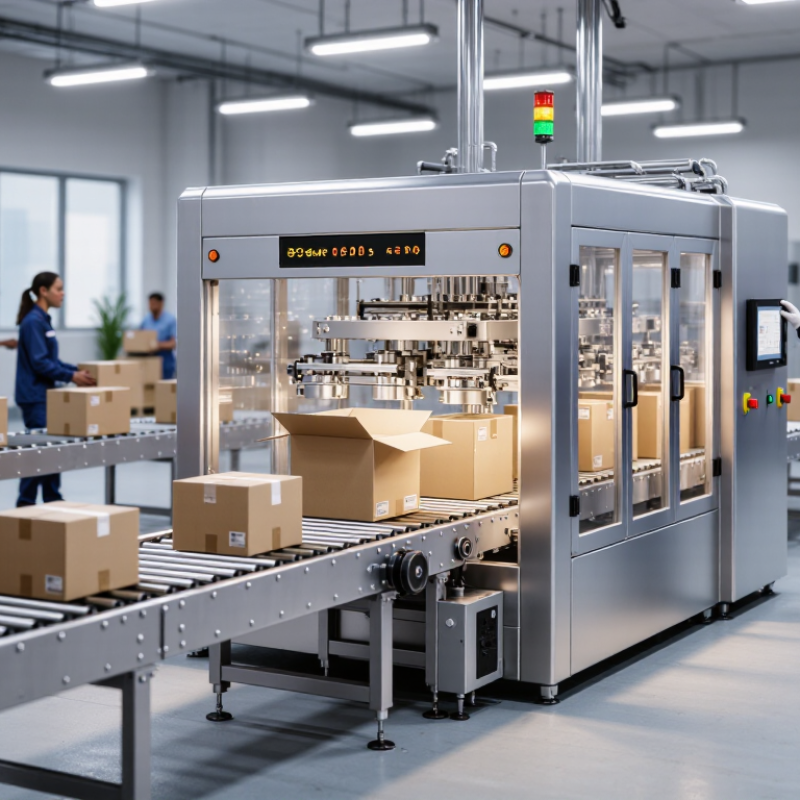
Understanding Case Packer Types and Packaging Requirements
How to Choose the Right Case Packer for Global Packaging?
Understanding Case Packer Types and Packaging Requirements
Choosing a case packer starts with the product, not the machine catalog. A system that handles rigid bottles may damage soft pouches. In practical trials, I check product orientation, carton strength, and loading speed together. Regular-slotted cartons often suit vertical or horizontal packing systems. Wrap-around packers can reduce materials but need accurate folding. Top-load packers support flexible products and mixed arrangements. Robotic systems offer layout flexibility, though programming and maintenance require skilled operators. Each type has trade-offs. The fastest option is not always the best one.
Packaging requirements become more demanding across regions. Carton dimensions may vary slightly between suppliers. Humid storage can weaken board strength. Fragile products may need gentle acceleration and controlled drops. Review case weight, sealing method, changeover frequency, floor space, utilities, and operator access. Confirm that the packer can meet your target output during realistic tests. Do not rely only on a supplier’s maximum speed. That number may ignore pauses, adjustments, and rejected cartons.
Tips: Test your actual products and cartons. Measure changeover time. Ask for clear maintenance records and operator training. Verify guarding, emergency stops, and inspection procedures. Leave room for future package changes. I once treated a minor carton-size variation as unimportant. It later caused repeated jams. Small details matter. Allow some uncertainty, then document what still needs validation.
How to Choose the Right Case Packer for Global Packaging? – Understanding Case Packer Types and Packaging Requirements
| Case Packer Type | Typical Loading Method | Best-Suited Products | Typical Output Range* | Key Advantages | Main Limitations | Recommended Packaging Requirements |
|---|---|---|---|---|---|---|
| Wraparound Case Packer | Products are grouped and wrapped by a flat corrugated blank, which is folded and glued around the load. | Cans, bottles, cartons, trays, and stable multipacks. | Approximately 10–60 cases per minute, depending on product and case format. | Efficient use of corrugated material; compact case design; suitable for high-volume production. | Requires consistent product grouping and accurately cut case blanks; less suitable for unstable or irregular products. | Rigid products, controlled product spacing, reliable adhesive application, and accurately dimensioned corrugated blanks. |
| RSC Case Erecting and Packing System | A regular slotted container is erected, bottom-sealed, filled with products, and then top-sealed. | Cartons, pouches, bottles, bags, and mixed secondary-packaging formats. | Approximately 10–40 cases per minute, depending on loading pattern and sealing method. | Flexible case availability; widely used case style; supports manual, semi-automatic, and automatic configurations. | Uses more corrugated material than some wraparound formats; requires dependable case squaring and flap control. | Consistent case dimensions, adequate board compression strength, accurate flap scores, and compatible hot-melt or tape sealing. |
| Top-Load Case Packer | Products are collated and placed vertically into an open case from above, often using robotic or pick-and-place tooling. | Flexible pouches, cartons, sachets, trays, display-ready packs, and fragile products. | Approximately 5–30 cases per minute, depending on product handling and case pattern. | Handles complex pack patterns and delicate products; supports retail-ready and display-ready cases. | Usually needs more floor space and sophisticated controls; tooling may be product-specific. | Stable case presentation, precise product orientation, adequate clearance above the case, and validated gripping or pick-up points. |
| Side-Load Case Packer | Products are grouped and pushed horizontally into an open case or tray. | Cartons, bottles, cans, trays, and products with uniform orientation. | Approximately 10–50 cases per minute, depending on product dimensions and pack pattern. | Straightforward product flow; efficient for regular shapes and repeated case configurations. | Less suitable for loose, flexible, or easily deformed products; pushing forces must be carefully controlled. | Uniform product dimensions, stable infeed lanes, controlled back pressure, and sufficient case opening width. |
| Robotic Case Packer | A programmable robot uses grippers, vacuum tooling, or layer tools to place products into cases. | Mixed SKUs, irregular products, fragile packs, multipacks, and products requiring multiple case patterns. | Approximately 5–40 cases per minute, depending on robot configuration, payload, and pattern complexity. | High flexibility; rapid changeovers; suitable for mixed-product lines and complex loading patterns. | Higher integration and programming requirements; gripper design is critical to product safety and throughput. | Defined product pick points, validated payload data, reliable vision or sensing where needed, and sufficient robot safety guarding. |
| Tray Former and Tray Packer | A flat blank is formed into a tray, after which products are loaded manually, mechanically, or robotically. | Bottles, cans, cartons, produce packs, club-store multipacks, and display-ready products. | Approximately 10–60 trays per minute, depending on tray style and loading pattern. | Good product visibility; supports retail displays; can reduce secondary packaging material. | Provides less protection than a fully enclosed case; tray rigidity and product stability must be verified. | Adequate tray board strength, accurate folding scores, stable product arrangement, and suitable palletizing conditions. |
| Pick-and-Place Case Packer | Products are collected into groups and transferred into cases by mechanical pick heads or servo-driven tooling. | Cartons, jars, bottles, pouches, and products requiring controlled orientation. | Approximately 10–50 cases per minute, depending on product count per pick and cycle time. | Accurate placement; repeatable pack patterns; suitable for lines requiring controlled product handling. | Mechanical tooling can be less flexible than robotics; format changes may require tooling adjustments. | Consistent product pitch, stable grouping, carefully designed contact surfaces, and accessible change parts. |
| Manual or Semi-Automatic Case Packer | Operators load products into pre-formed cases, while the machine assists with case forming, positioning, or sealing. | Low-volume products, frequent SKU changes, seasonal items, and products requiring visual inspection. | Approximately 2–15 cases per minute, depending on staffing and product format. | Lower initial investment; easy to adapt; practical for variable or limited production volumes. | Higher labor cost and variation; throughput depends on operator availability and ergonomics. | Ergonomic work height, clear work instructions, safe access, manageable case weight, and consistent sealing procedures. |
*Output ranges are general industry planning ranges. Actual performance depends on product stability, case dimensions, pack pattern, machine configuration, material quality, and operating conditions.
Related Posts
-
What Is the Best Automatic Case Packer from China?
-
Best China Case Sealer for Global Buyers?
-
Top 10 Benefits of Using an Automatic Case Packer for Your Business?
-
Best Case Packer Solutions for China Top Manufacturers?
-
2026 Top Types of Automatic Case Packers for Efficient Packaging Solutions
-
Top 10 Automatic Case Packers in China for Global Buyers?
