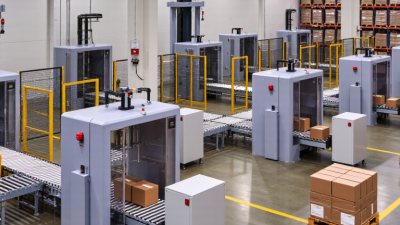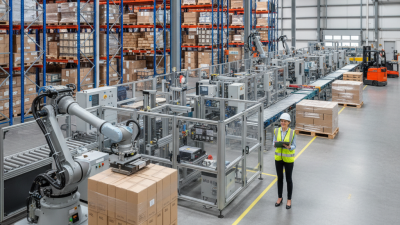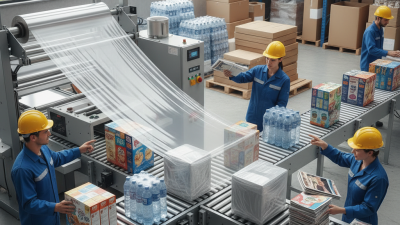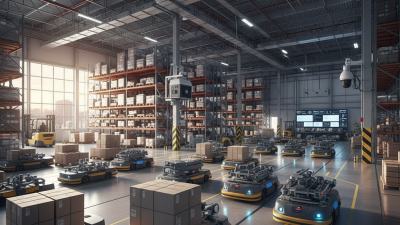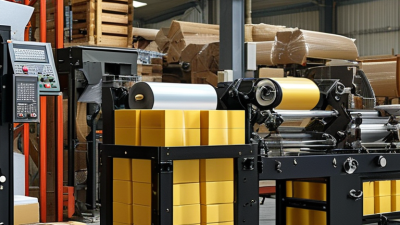
A palletizer machine can turn a crowded packing area into a steadier, more predictable part of production. Yet choosing one is not as simple as comparing speed figures. Case dimensions, pallet patterns, available floor space, and changeover frequency all affect performance. A line handling mixed carton sizes needs different flexibility from one stacking uniform bags all day. Small details matter. A pallet that arrives unevenly can disrupt even a fast system.
Industry reports show why automation is attracting attention. The International Federation of Robotics reported 541,302 industrial robot installations worldwide in 2023, with annual installations exceeding 500,000 for the second consecutive year (World Robotics 2024). This figure covers industrial robots broadly, not palletizers alone, so it should not be mistaken for a palletizing market total. MHI and Deloitte’s 2024 Annual Industry Report also identifies automation and robotics among technologies drawing increased supply-chain investment. These signals point to wider adoption, but they do not guarantee that every facility will benefit equally. A machine that looks efficient in a specification sheet may struggle with awkward cartons or frequent product changes. That is worth admitting.
This guide compares top palletizer machines for different business needs, from compact operations to high-volume lines. It considers throughput, load stability, integration, safety features, and the support available after installation. Use the comparisons to build a shortlist, then verify performance against your actual products and shift patterns. A careful test beats a confident guess.
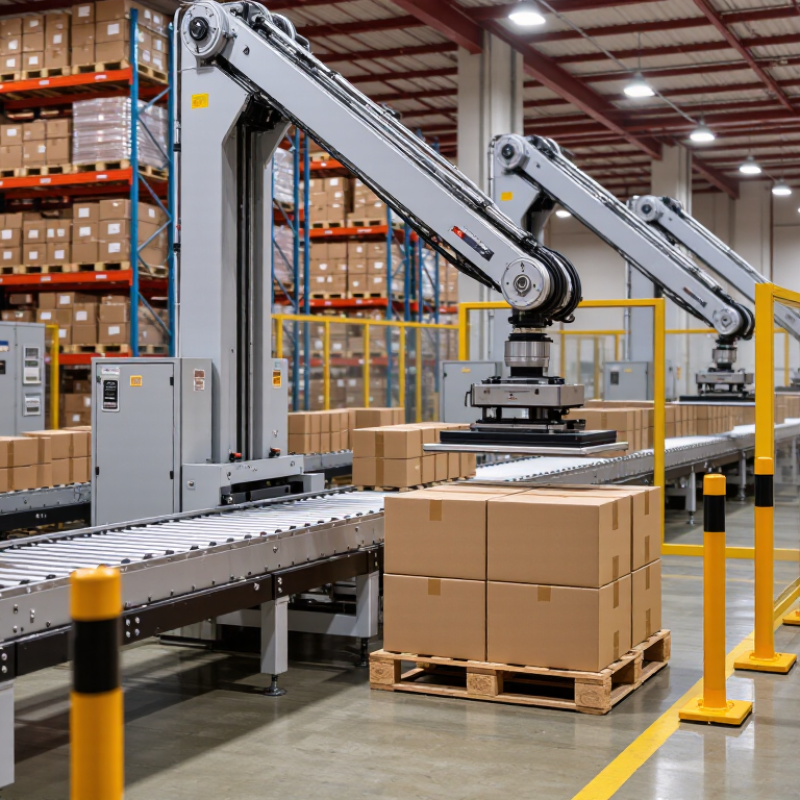
A palletizer is a machine that arranges packaged products into stable loads on pallets. At the end of a packaging line, it can receive cartons from a conveyor, orient them into a set pattern, and stack each layer to a specified height. Some systems handle bags or cases, while others use robotic arms to place varied shapes. The right setup depends on product weight, package dimensions, line speed, and available floor space.
The process is practical, not magic. Sensors track incoming cartons, and controls coordinate their movement toward the pallet. A slip sheet may be added between layers when loads need extra stability. Operators can adjust recipes for different case sizes, though changeovers still take time and require careful checks. Small misalignments matter. A tilted carton near the bottom can make an entire load less secure.
Palletizers reduce repetitive lifting and help keep output consistent across shifts. They also need routine inspection: worn conveyor belts, dirty sensors, or loose guards can disrupt production. Before choosing a machine, businesses should measure typical loads and observe real line conditions, including peak speeds and product variation. Specifications alone rarely tell the whole story. A short trial with actual cartons can reveal awkward cases that planning missed.
How different palletizer setups automate end-of-line packaging
Indicative industry planning ranges: semi-automatic systems typically handle about 5–15 cases per minute, robotic palletizers about 10–30, and conventional high-speed palletizers about 30–100. Actual throughput depends on case dimensions, pallet pattern, product flow, and changeover requirements.
Choosing a palletizer starts with the product, not the machine catalogue. Bags of flour, cartons, cases, and fragile containers behave differently on a pallet. Robotic palletizers suit mixed patterns and frequent product changes. Layer palletizers can deliver high throughput when loads arrive in steady layers. Conventional arm systems may offer a practical balance for medium production lines. I have seen teams focus on speed, then struggle with unstable stacks. That mistake is costly. Measure package dimensions, weight, surface friction, and allowable compression before comparing equipment.
Throughput must include real interruptions, not only advertised cycles. Record peak output, shift length, changeover time, and rejected cases. A machine handling 40 cases per minute may underperform if operators wait during pattern changes. Floor space also changes the decision. Robotic cells often use a smaller footprint, but safety clearances and pallet staging need room. Low-ceiling facilities may reject tall layer systems. Product testing remains essential. Some assumptions fail quickly.
Tips: Bring sample products and empty pallets to a controlled trial. Test three patterns, corner alignment, wrap tension, and recovery after a dropped case. Ask for noise, maintenance access, utility needs, and training details. Leave space for future conveyors, because expansion rarely follows the original drawing. If products vary widely, flexibility may matter more than maximum speed. If one SKU dominates, a simpler dedicated solution can be more reliable.
ISO 6780 recognizes six pallet footprints: 800×1200, 1000×1200, 1016×1219, 1067×1067, 1100×1100, and 1165×1165 millimeters. Each footprint changes the machine’s infeed width, layer pattern, gripper reach, and discharge spacing. A 1016×1219 pallet may need a different case arrangement than a 1000×1200 pallet. Square pallets also challenge corner placement and layer stability. Small errors matter.
Machine selection should begin with measured pallet data, not a catalog photograph. Conventional layer palletizers suit stable, high-volume cases. Robotic palletizers offer more flexibility when products or footprints change.
The 2024 MHI Annual Industry Report found that 55% of respondents expected to increase supply-chain technology investment. The International Federation of Robotics reported 553,052 industrial robots were installed worldwide in 2022. Those figures support automation, but they do not justify oversizing equipment.
A 12-hour production trial can reveal jams, unstable corners, and awkward stretch-wrap handoffs. I would also test damaged pallets, mixed case heights, and imperfect labels. That is less elegant than a spreadsheet, but more reliable.
A machine rated for six footprints may still require separate recipes, tooling, or manual adjustments for each format.
Choosing a palletizer starts with the line, not the machine brochure. Estimate your peak output in cases per minute, then check whether that rate holds during real production. A unit rated for 60 cases per minute may struggle when cartons arrive unevenly or operators pause to clear jams. Watch a full shift if possible. Numbers need context.
Changeover time matters when your business handles several carton sizes or pallet patterns. Ask how long a trained operator needs to switch recipes, adjust guides, and verify the first stable pallet. A change that takes ten minutes on paper may take longer when tools are misplaced or instructions are unclear. That detail is easy to overlook. Track changeovers with a stopwatch, and include cleanup and restart time.
Compare total cost over the equipment’s expected working life, not just the purchase price. Include installation, guarding, training, spare parts, energy, and planned maintenance. Request realistic estimates for service visits and common replacement components. Then compare those costs with labor savings and reduced product damage. A spreadsheet helps, but it cannot predict every production snag. I would leave room for uncertainty, especially when current labor or output data is incomplete. A slightly slower machine may fit better if it changes over quickly and keeps pallets stable with less operator attention.
Top Palletizer Machines for Your Business Needs?
Installation planning should begin with the pallet pattern, product dimensions, and available floor space. Measure twice. Leave room for maintenance access, pedestrian routes, and emergency stops. A palletizer also needs reliable coordination with conveyors, sensors, wrappers, and upstream equipment.
OSHA’s FY2023 enforcement data recorded 1,644 machine-guarding violations. That figure shows why guarding cannot be treated as an afterthought. Apply a documented risk assessment before installation. Fixed barriers should prevent reach-through access near moving arms, conveyors, and layer-forming devices. Interlocked gates must stop hazardous motion when opened. Emergency-stop devices should remain visible and reachable from normal work positions. Lockout/tagout procedures must cover electrical, pneumatic, and stored mechanical energy.
Integration requires more than connecting cables. Test product detection, pallet presence, jam recovery, and restart behavior under realistic conditions. Confirm that safety circuits respond correctly after power loss. Train operators using the actual controls and access points. OSHA’s 29 CFR 1910.212 requires guarding against machine hazards, while BLS reported 5,283 fatal occupational injuries in 2023 across U.S. workplaces. The numbers are broad, but the lesson is practical: small design gaps matter. In my experience, teams often underestimate cleaning access and temporary bypass risks. That assumption needs challenging before production begins.
| Palletizer Type | Typical Applications | Planning Considerations | Integration Needs | Guarding and Safety Planning |
|---|---|---|---|---|
| Conventional layer palletizer | High-volume, uniform cases or bags arranged in consistent layer patterns. | Plan for a defined infeed arrangement, pallet staging, layer-forming area, and space for pallet discharge. Confirm package dimensions, weight, and required pattern before equipment selection. | Coordinate conveyor elevations, package spacing, pallet dispensers, and downstream stretch wrapping or conveying. Verify production rates against the full line, not just the palletizer. | Assess access to moving conveyors, layer-forming mechanisms, and pallet handling zones. Fixed barriers, interlocked access gates, and emergency stops may be needed based on the risk assessment. |
| Low-level palletizer | Operations that benefit from loading cases near floor level, including facilities with limited overhead clearance. | Check floor space, operator access, pallet exchange method, and clearance for accumulated loads. Include room for maintenance and safe removal of jams. | Confirm conveyor interfaces, case orientation, pallet supply, and controls handshakes with upstream and downstream equipment. | Evaluate pinch points and moving mechanisms at operator height. Prevent access to hazardous motion during operation, and provide safe procedures for clearing jams and servicing equipment. |
| High-level palletizer | Lines where cases are conveyed to an elevated layer-forming and palletizing area. | Review building height, overhead utilities, structural requirements, and safe access for inspection and maintenance. Plan for elevated platforms and material flow at multiple levels. | Coordinate elevated conveyors, pallet discharge, guarding boundaries, and any lift or transfer devices. Include controls and access planning for all connected equipment. | Address fall hazards as well as machine hazards. Guard elevated platforms and openings where required, and provide controlled access to elevated service points. |
| Robotic palletizer | Mixed products, changing pallet patterns, or applications requiring flexible pick-and-place handling. | Confirm payload, reach, end-of-arm tooling, product stability, and the required pattern range. Allow space for robot motion, pallet positions, and safe maintenance access. | Integrate robot controls with conveyors, vision or sensing equipment, pallet supply, and line controls. Validate product recipes and recovery steps during commissioning. | Use a documented risk assessment to determine protective measures, such as physical barriers, interlocked gates, or presence-sensing devices. Consider robot reach, stopping distance, and access during teach and maintenance modes. |
| Collaborative robotic palletizer | Lower-speed or space-constrained tasks where people may work near a robot under specifically assessed conditions. | Confirm that the complete application—not only the robot—is suitable for collaborative operation. Consider tool shape, product edges, payload, speed, and foreseeable contact risks. | Coordinate robot, gripper, conveyor, pallet position, and safety controls. Test the final application under its actual operating conditions. | Collaborative operation does not automatically eliminate the need for guarding. Select safeguards based on the application risk assessment and applicable standards and regulations. |
| Hybrid or modular palletizing cell | Facilities combining automated palletizing with manual tasks or planning phased expansion. | Define the boundary between manual and automated work. Reserve floor space for future modules, pallet staging, traffic routes, and maintenance access. | Agree on interface points, signals, line speeds, and responsibility for shared conveyors and safety circuits before installation. | Protect workers at the transitions between manual and automated areas. Clearly identify controlled access points and safe shutdown procedures. |
| Installation and compliance note: These categories are planning guides, not performance guarantees. Final equipment selection and guarding should be based on site conditions and a task-specific risk assessment. In the United States, review applicable OSHA requirements, including 29 CFR 1910.212 for machine guarding and 29 CFR 1910.147 for control of hazardous energy. Robot installations may also require review of applicable ANSI/RIA robot safety standards. Confirm requirements with qualified safety and engineering professionals. | ||||