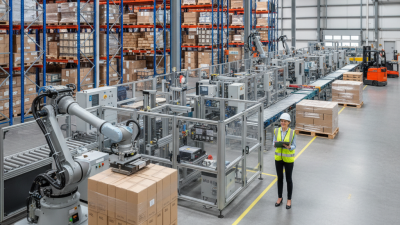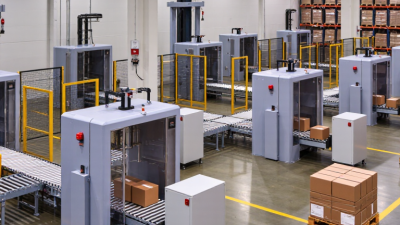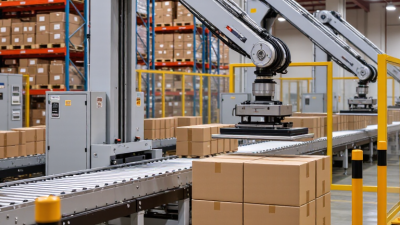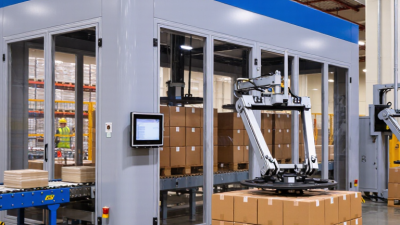
Choosing among China’s top palletizer manufacturers requires more than comparing catalog prices. A machine may look impressive in a showroom, yet struggle with dusty cartons, uneven bags, or frequent pallet changes. Real performance appears on the production floor. It shows in stable layer patterns, safe access for operators, and quick recovery after a stoppage.
Packaging-machinery consultant and author John R. Henry offers a useful practical lens. I cannot verify a direct quotation from him on Chinese palletizers, so I will not invent one. A paraphrase of the selection principle is: “Judge the machine by how well it serves the entire packaging line.” That means checking payload, cycle rate, controls, guarding, spare-parts access, and local service. Ask for a test using your actual products and pallet pattern. Watch the robot or mechanical arm complete repeated cycles, not just one polished demonstration.
This guide compares ten manufacturers through those practical details. It considers product range, customization, integration experience, support, and evidence of reliable operation. Company claims deserve careful checking. Request customer references, installation records, and clear acceptance criteria. A low quoted price can hide costly integration work. Still, no ranking is perfect: factory scale does not guarantee a better fit for every site. The right palletizer depends on the load, available floor space, line speed, and the people who will maintain it. Check the details.
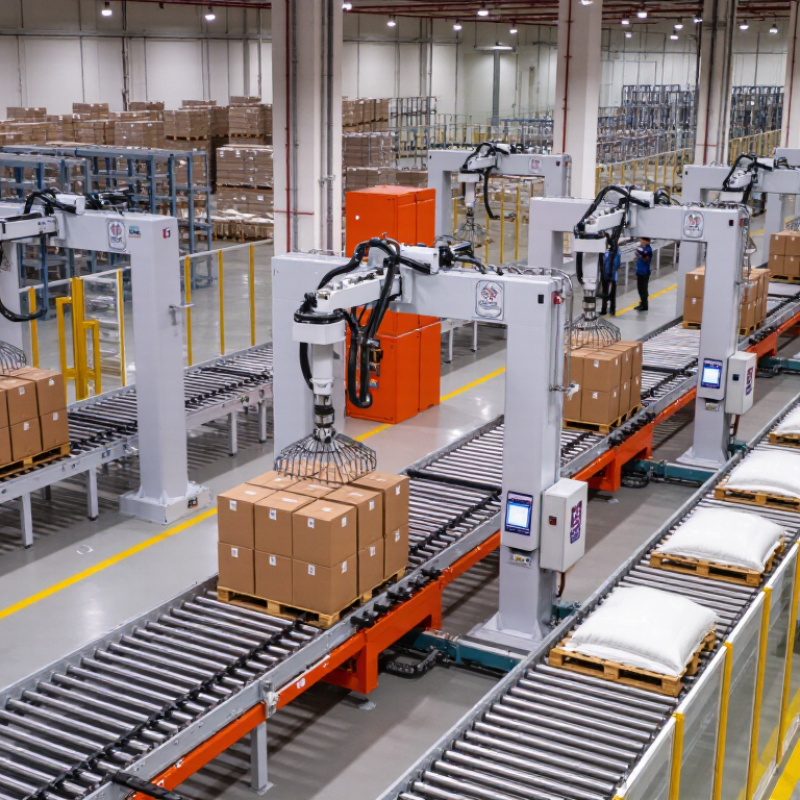
A palletizer is a machine that stacks cases, bags, or cartons onto a pallet for storage and transport. It receives products from a conveyor, groups them into a planned pattern, then uses a gripper, clamp, or vacuum head to place each layer. Some systems build full layers before transferring them; others place items one at a time. The result depends on package size, weight, and how well the load stays stable. Small details matter. A slightly crushed carton can disrupt a whole layer.
The International Federation of Robotics reported 4,281,585 industrial robots operating worldwide in 2023, a 10% increase from 2022 (World Robotics 2024). This figure covers industrial robots broadly, not palletizers alone, but it shows the expanding role of automation in production.
In practice, a palletizer may combine conveyors, sensors, controls, and a lift table. Sensors check product position, while controls coordinate the stacking pattern and pallet height. Yet automation is not magic: poor incoming alignment can still cause jams, and an efficient pattern may not suit every shipment.
Tips: Confirm the case dimensions and pallet type before choosing a system. Test real products, including imperfect cartons. Watch a full changeover, not only a smooth demonstration.
Selecting China’s top palletizer manufacturers requires more than comparing product pages or machine prices. The review should examine verifiable company records, manufacturing capability, and documented installations. Evidence matters.
Technical checks should cover payload range, pallet patterns, cycle rate, changeover time, and compatibility with real cartons or bags. A stated throughput is meaningful only when product dimensions and operating conditions are clear. Reviewers can request layout drawings, acceptance-test records, and references from facilities handling similar loads. Details count.
Serviceability deserves equal weight. Check spare-parts availability, technician response arrangements, operator training, and integration with conveyors and wrapping equipment. Compare claims with customer feedback and independently verifiable project evidence where possible. Scores can reflect technical fit, build quality, delivery record, support, and lifetime value. Not every category has equal evidence. Public information may be incomplete, and a polished website cannot prove long-term uptime. Those limits should be disclosed, uncertain claims treated cautiously, and rankings revisited when better operating data becomes available.
China’s palletizer market includes manufacturers focused on different production needs. These ten capability-based profiles are not a verified sales ranking; compare current specifications and references before shortlisting suppliers.
Profile one: A supplier of robotic palletizing cells, suited to mixed carton sizes and frequent product changes.
Profile two: A maker of conventional layer palletizers, often chosen for steady, high-volume lines.
Profile three: A specialist in compact systems for factories with limited floor space.
Profile four: A builder of heavy-duty equipment for dense bags or large cases.
Profile five: A manufacturer integrating conveyors, pallet dispensers, and wrapping equipment.
Profile six: A provider of palletizing systems for food and beverage plants, where washdown and cleaning access matter.
Profile seven: A supplier serving chemical and building-material producers, with attention to dust control and load stability.
Profile eight: A maker of configurable systems for varied carton patterns and short production runs.
Profile nine: An automation integrator pairing palletizers with vision systems and line controls.
Profile ten: A manufacturer emphasizing local installation, operator training, and spare-parts support.
Details matter. Ask each candidate for cycle-time data, payload limits, safety documentation, and comparable customer references. A polished demonstration helps, but it cannot replace a factory acceptance test. Even good specifications may hide awkward changeovers. Check them on site.
When comparing palletizer manufacturers in China, product differences often matter more than headline speed. Conventional layer palletizers suit stable cartons and fixed production runs. Robotic systems handle varied case sizes and changing pallet patterns. For example, a line packing identical boxes may benefit from a dedicated layer machine, while mixed cartons usually need flexible gripping and pattern software. Faster is not always better.
Compare payload, reach, cycle rate, and positioning accuracy against your actual products. A gripper must hold slippery shrink-wrapped cases without crushing corners. Ask for demonstrations using cartons with your real dimensions and weights. Also check whether the system supports slip sheets, empty-pallet dispensing, and pallet transfer. These features can reduce manual handling, but they add equipment and maintenance needs.
Control systems vary in flexibility and ease of adjustment. Some machines offer recipe-based settings and clear fault displays; others may require more specialist support when product formats change. Ask how operators update pallet patterns, access spare parts, and receive remote diagnostics. Noise, floor space, and integration with conveyors deserve attention too. A specification sheet cannot show every bottleneck. Sometimes the awkward detail is the one that matters. Check performance across a full shift, not just a short factory trial. A small mismatch in carton dimensions can disrupt an otherwise impressive line.
The table below compares ten palletizing configurations commonly available in the Chinese market. Entries are technology profiles, not named suppliers or a verified ranking of manufacturers; actual specifications and availability vary by supplier and project.
| No. | Palletizer Configuration | Typical Products | Core Technology | Typical Strengths | Key Considerations |
|---|---|---|---|---|---|
| 1 | Articulated-robot bag palletizer | Bags of grain, feed, fertilizer, or chemicals | Multi-axis robot with a bag gripper or clamp; conveyor-fed picking and programmable layer patterns | Flexible layouts and recipe changes; can handle different bag patterns with suitable tooling | Bag stability, gripper choice, and required cycle rate affect performance |
| 2 | Articulated-robot case palletizer | Cartons, cases, and selected packaged goods | Robot arm with vacuum, clamp, or combined end-of-arm tooling | Can accommodate multiple case sizes and pallet patterns through programmed recipes | Case strength, surface porosity, and tool changeover need evaluation |
| 3 | High-level layer palletizer | Cases or bags arranged into complete layers | Layer-forming conveyor, transfer mechanism, and elevated pallet-loading station | Suited to continuous, repetitive layer handling on stable, high-volume lines | Generally needs consistent incoming products and more vertical clearance |
| 4 | Low-level layer palletizer | Cases, bags, and other uniform packages | Layer formation and pallet loading arranged closer to floor level | Can simplify product feeding and fit facilities with limited overhead height | Floor space, pallet exchange, and operator access should be checked in the layout |
| 5 | Gantry palletizer | Cases, trays, or grouped packages within a defined work area | Cartesian motion along linear axes, with a gripper or vacuum tooling | Provides structured coverage of a rectangular area and can serve multiple pallet positions | Requires a suitable frame and must be designed around the pallet and product range |
| 6 | Column-type palletizer | Cases or bags on a compact production line | Vertical lift column combined with a product transfer and layer-placement mechanism | A relatively compact arrangement for repeatable palletizing tasks | Check product changeover needs and access for maintenance and pallet removal |
| 7 | Multi-line robotic palletizing cell | Cases or bags arriving from several conveyors | Robot cell with conveyor routing, product identification, and coordinated pallet stations | Can consolidate palletizing from multiple production lines in one cell | Line balancing, traffic logic, guarding, and fault recovery are important design factors |
| 8 | Mixed-SKU robotic palletizer | Different case sizes or products for mixed pallets | Robot with product identification and pallet-pattern or order-based control software | Supports variable product sequences and configurable pallet patterns | Accurate product data and stable identification are essential for correct layer placement |
| 9 | Bag layer palletizer | Filled woven, paper, or plastic bags, subject to product and bag compatibility | Bag flattening or alignment, layer formation, and mechanical transfer or placement | Designed around repeatable bag layers and common bag-packing line layouts | Bag dimensions, fill consistency, and layer interlocking affect stack quality |
| 10 | Integrated palletizing and wrapping cell | Palletized cases or bags ready for dispatch | Palletizer integrated with pallet conveying and a stretch-wrapping station | Combines pallet loading and load securing within a coordinated end-of-line system | Confirm pallet dimensions, wrap requirements, line controls, and downstream handling interfaces |
When comparing suppliers, request project-specific cycle-rate data, supported product and pallet dimensions, layout drawings, safety documentation, control-system details, and references for comparable installations.
When comparing palletizer manufacturers, start with the load, not the brochure. Record case dimensions, weight range, pallet pattern, target rate, and hours per shift. Ask for a live test using your own products. A machine that handles uniform cartons may struggle with soft bags or mixed case sizes. Small details matter. Check whether the quoted speed includes infeed, pallet changes, and downstream wrapping. The International Federation of Robotics’ World Robotics 2024 report counted 4,281,585 industrial robots operating worldwide in 2023, a 10% annual increase. That figure signals broader automation growth, but it does not prove a palletizer suits your line.
Evaluate integration, safety design, service response, and spare-parts availability alongside purchase price. Request a layout showing conveyors, guarding, operator access, and maintenance clearance. Ask for documented cycle-time tests and references from facilities with similar loads. MHI’s 2024 Annual Industry Report found that 55% of surveyed organizations were increasing supply-chain technology investment. Still, investment plans are not a substitute for verified performance. Compare total ownership costs, including installation, training, changeover time, and expected downtime. One factory test is not enough. I would also check how clearly the manufacturer explains limitations; vague answers about unusual cartons deserve a second look.
Suggested evaluation weights for comparing manufacturers. These are planning guidelines, not measured market data or a ranking of specific companies.
Prioritize application fit and reliability, then assess after-sales support, integration requirements, safety, and total lifecycle cost. Adjust the weights to match your products, throughput targets, and operating conditions.