Choosing the best heat shrink wrap in 2026 means looking beyond roll price and glossy product photographs. A film that displays retail boxes beautifully may perform poorly around sharp corners or heavy multipacks. Price can mislead. The OECD’s Global Plastics Outlook (2022) reports that only 9% of global plastic waste was ultimately recycled in 2019. That figure covers all plastic waste, but it highlights why packaging choices deserve closer scrutiny. Buyers need to evaluate material efficiency, product protection, and realistic disposal options together.
Start with the actual package: its dimensions, weight, edges, storage conditions, and exposure to handling. Polyolefin films commonly suit retail presentation, while polyethylene often serves heavier bundles requiring greater toughness. Neither material automatically guarantees the best result. Film thickness, shrink force, sealing temperature, and equipment compatibility can change performance substantially. Samples matter. Test representative products at normal production speeds, then inspect seals, wrinkles, punctures, and barcode readability. A thinner film may reduce material use yet increase failures; that trade-off deserves scrutiny before switching.
Environmental claims also need evidence. UNEP’s Turning off the Tap report (2023) projects that systemic changes could reduce plastic pollution by 80% by 2040. This is a conditional projection, not a guarantee about any particular film. Ask suppliers for technical datasheets, documented test results, and specific support for recyclability claims. Local collection and processing capabilities still determine practical recycling options. This guide examines how to compare heat shrink wrap using measurable performance, total packaging cost, and substantiated environmental information.
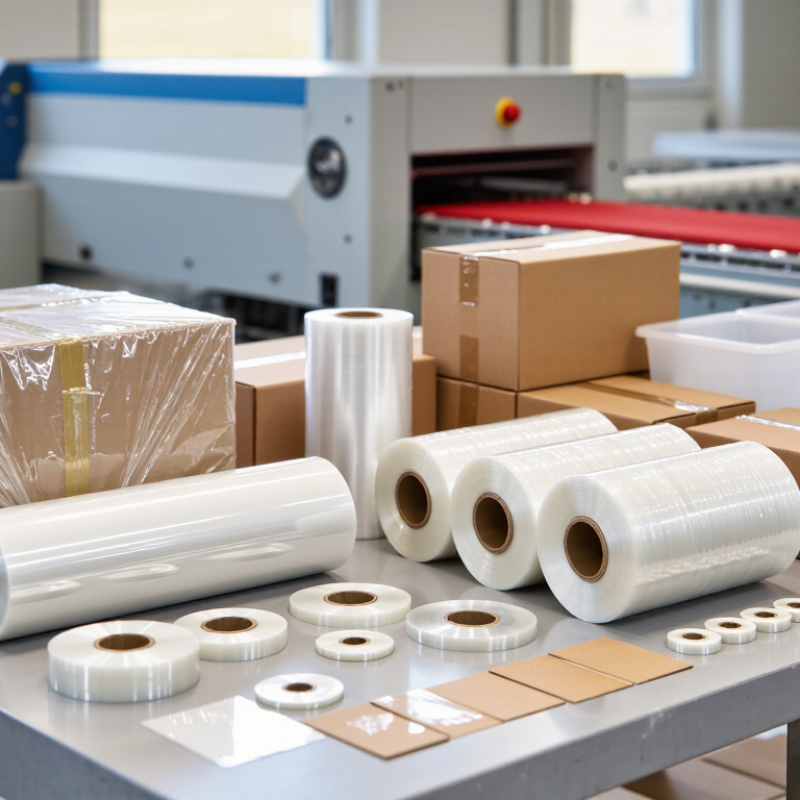
Choosing heat shrink wrap in 2026 starts with understanding three common materials: polyolefin (POF), polyethylene (PE), and polyvinyl chloride (PVC). Each behaves differently.
POF provides clear presentation and works well for retail boxes, stationery sets, and multipacks with slightly irregular shapes. Its flexibility helps reduce tearing around corners, although sharp edges may still require protection. For direct food contact, verify the specific film’s documentation and suitability for the intended conditions.
PE shrink film commonly bundles beverage bottles, canned goods, and heavier products that need tougher outer packaging during handling. Low-density polyethylene, or LDPE, is widely used in these applications.
Expect a less polished appearance than many POF films, especially when product visibility matters on a retail shelf. Strength matters here. PVC offers clarity and relatively low shrink temperatures, making it useful for some boxed goods and presentation packaging. However, overheating can produce irritating fumes, so equipment compatibility and appropriate ventilation deserve attention.
Film thickness alone does not predict performance; package shape, seal quality, shrink force, and heating conditions also affect the result. A thicker film might seem safer, yet it can require more heat and create unnecessary material waste.
Test several sample packs before ordering a full roll. Check corners for holes, seams for splitting, and printed labels for heat damage. A slightly wrinkled sample may be acceptable for transport packaging, but the same finish could disappoint on a gift box.
Choosing heat shrink wrap in 2026 starts with your product’s shape, weight, and exposure to handling. Polyolefin suits retail boxes, stationery sets, and irregular items needing clear presentation and flexible seals. It generally offers better puncture resistance than PVC at comparable thicknesses, although formulations vary. A 15–19 micron film is a reasonable trial range for many lightweight retail packs. Test the corners. Sharp carton edges can expose weaknesses that flat samples hide. For food applications, request documentation confirming suitability for the intended contact conditions.
PVC offers clear presentation and often shrinks at lower temperatures, which can help with some heat-sensitive products. Its stiffness can work well around small, rigid boxes. However, sealed edges may become brittle, particularly during cold storage or rough handling. Processing requires suitable ventilation and careful temperature control because overheating can release irritating decomposition fumes. Low purchase cost alone does not establish the cheapest packaging process. Include rejected packs, ventilation requirements, and downtime when comparing costs.
Polyethylene is commonly used for heavier bundles, including multipacks of bottles and grouped cartons. It typically uses thicker film and higher tunnel temperatures than lightweight polyolefin applications. Expect strong containment, with clarity and finish depending on the grade. Check your equipment. A tunnel configured for thin polyolefin may need adjustments or lack capacity for thicker polyethylene. Trial actual products at production speed, then inspect seals after cooling and simulated transport. The clearest film may still lose if it repeatedly tears during packing.
Compare polyolefin (POF), polyvinyl chloride (PVC), and polyethylene (PE) for your application. This chart highlights typical material density ranges: at the same film thickness and covered area, a denser film uses more material by weight.
Bars show approximate typical density ranges in g/cm³, rather than performance scores. POF formulations vary; PE here refers to low-density polyethylene (LDPE), commonly used for shrink packaging. Actual values depend on resin blends, additives, and film construction. Confirm the specification for the film you purchase. These are general material properties, not a 2026 market survey.
POF: A common choice for clear retail packaging, with toughness and flexibility suited to many product shapes. PVC: Offers good clarity and stiffness, but requires careful heat control and appropriate ventilation during sealing and shrinking. PE: Commonly used for heavier bundles, multipacks, and transport packaging, where thicker films provide strength.
Density alone does not determine the best wrap. Compare film thickness, shrink force, optical clarity, puncture resistance, and compatibility with your sealing equipment. For food packaging, verify that the specific film meets the applicable food-contact requirements.
Choosing heat shrink wrap in 2026 starts with measuring the product’s length, width, and height, including protruding corners. Measure the actual package. For a box measuring 200 × 120 × 50 mm, film width must accommodate both width and height. Leave extra space for inserting the product and making reliable seals. Too much excess creates loose folds; too little can split seals or crush lightweight cartons. Check how your supplier defines roll width, especially when comparing centerfold and single-wound film.
Thickness affects puncture resistance, appearance, and the heat needed for a successful wrap. A 60-gauge film is approximately 15 microns thick; 100 gauge is approximately 25 microns. These measurements describe thickness, not guaranteed strength, because film composition also matters. Smooth stationery boxes may suit thinner film, while sharp corners or heavier bundles can require thicker material. Thicker is not automatically better. It may need more heat, which can distort sensitive packaging. An imperfect trial pack can reveal more than a polished product specification.
Check shrink specifications carefully. Packaging films commonly list shrink percentages in the machine and transverse directions, rather than a single tubing-style shrink ratio. A stated 50% shrink describes dimensional reduction under specified test conditions; it does not guarantee identical performance on your equipment. Ask for the test temperature and exposure time, then trial several packages at your intended production speed. Watch for wrinkles, bowed panels, and weak seals. I would accept a small cosmetic wrinkle before increasing heat enough to damage the product.
Compare common packaging films, calculate a starting film width, and interpret shrink specifications before testing a film on your product.
| Selection Factor | Material or Example | Typical Range or Calculation | Common Use or Meaning | What to Check Before Buying |
|---|---|---|---|---|
| 1. Choose the Film Material and Thickness | ||||
| Polyolefin shrink film | POF, commonly supplied as multilayer film | Common thin-film packaging range: approximately 12–30 μm (0.47–1.18 mil). | Frequently used for clear retail packaging, cartons, books, games, and multipacks. | Check puncture resistance, seal strength, shrink force, and equipment compatibility. For food contact, verify compliance for the specific film and intended use. |
| PVC shrink film | Polyvinyl chloride | Common packaging range: approximately 15–40 μm (0.59–1.57 mil). | Used for clear display packaging around relatively rigid products. | Confirm ventilation requirements and the recommended sealing and shrinking conditions. Check local packaging requirements and the intended recycling route. |
| Polyethylene shrink film | PE, commonly LDPE-based formulations | Common bundling range: approximately 40–150 μm (1.57–5.91 mil). Heavier industrial grades are also available. | Frequently used for beverage multipacks, grouped containers, and heavier transport bundles. | Match thickness to bundle weight, handling conditions, and unsupported openings. Verify tunnel capacity and required holding strength. |
| Thickness conversion | Micrometers and mils | 1 mil = 25.4 μm. Example: 19 μm ÷ 25.4 ≈ 0.75 mil. |
A mil is one-thousandth of an inch. It is a different unit from a millimeter. | Compare films in the same units. Thickness alone does not establish strength; resin formulation and film construction also matter. |
| 2. Choose the Film Format and Width | ||||
| Tubing layflat width | Rectangular product cross-section: 120 mm wide × 60 mm high | Geometric minimum layflat width = width + height. 120 + 60 = 180 mm, before clearance. |
A flattened tube has a circumference equal to twice its layflat width. The example product has a 360 mm cross-sectional perimeter. | Add clearance for insertion, tolerances, and the actual product shape. Confirm usable internal width and seam construction. |
| Centerfold film width | Rectangular product cross-section: 120 mm wide × 60 mm high | Geometric starting width ≈ width + height. 120 + 60 = 180 mm, before machine and sealing allowances. |
Centerfold film opens to approximately twice its stated folded width. This calculation gives a starting point for wrapping the product cross-section. | Add the clearance and seal allowance required by the machine. Confirm that the quoted roll width is folded width. |
| Flat-sheet coverage | Rectangular product cross-section: 120 mm wide × 60 mm high | Cross-sectional perimeter = 2 × (width + height). 2 × (120 + 60) = 360 mm, before overlap. |
A sheet wrapping completely around this cross-section needs at least the perimeter length in the wrapping direction. | Add overlap or seam allowance. Product length, end closure, and machine orientation determine the other sheet dimension. |
| 3. Understand Shrink Percentage and Shrink Ratio | ||||
| Free shrink percentage | Film sample: 100 mm before heating, 60 mm after heating | Shrink = (100 − 60) ÷ 100 × 100 = 40%. | This measures dimensional reduction in one direction when a sample shrinks without restraint under specified test conditions. | Compare machine-direction and transverse-direction results at the same test temperature and exposure time. |
| Dimensional shrink ratio | The same 100 mm sample shrinks to 60 mm | Original-to-final dimension = 100:60 ≈ 1.67:1. | A 40% reduction corresponds to approximately 1.67:1. A 50% reduction corresponds to 2:1. | For packaging film, use the specified shrink percentage in each direction. Ratios such as 2:1 are also common in heat-shrink tubing specifications and should not be assumed to describe packaging film. |
| Shrink force | Flexible cartons, thin trays, or delicate products | No universal force value applies across film types and test methods. | Film can shrink sufficiently yet exert enough force to bend or distort a product. | Request shrink-force data where available and run a packaging trial. Select a suitable low-shrink-force grade when product distortion is a concern. |
| Operating conditions | Sealer and shrink tunnel | Use the film supplier’s recommended processing window as the starting point. | Finished results depend on temperature, dwell time, airflow, film thickness, and product geometry. | Check seal integrity, wrinkles, holes, product distortion, and bundle stability at the intended production speed. |
Choosing heat shrink wrap in 2026 starts with the film’s documented operating window, including temperature, exposure time, and shrink percentage. Check the datasheet. A tunnel’s displayed temperature does not necessarily match the temperature reaching the film around your product. ASTM D2732 measures unrestrained shrinkage at specified temperatures, helping buyers compare films under defined conditions. Request results in both machine and transverse directions, particularly when wrapping rectangular cartons with sharp corners.
Match the film to your sealer, tunnel airflow, conveyor speed, and available electrical supply. Gauge matters too. Thicker film may require longer heating, potentially reducing throughput or overheating sensitive contents before the package looks acceptable. Test actual products, including the lightest carton and the tallest bundle, at your intended production speed. Record seal failures, corner holes, wrinkles, and packages per minute across several settings rather than judging one attractive sample. A short trial can miss problems that emerge after equipment warms up.
Safety includes operator heat exposure, hot surfaces, ventilation, and access to emergency stops. The 2016 NIOSH heat-exposure criteria recommend that new workers receive no more than 20% of usual heat exposure on day one. Subsequent daily increases should not exceed 20%, although individual conditions still require assessment. That guidance concerns worker acclimatization, not the film’s heating cycle. Review the safety data sheet and verify extraction requirements, especially where overheated film could release decomposition products. Gloves help, but poorly positioned guards or awkward roll changes still deserve attention.
Choosing heat shrink wrap in 2026 means calculating cost per successfully wrapped pack, not simply price per kilogram. Include film consumption, tunnel electricity, labor, rejected packs, and downtime. Measure actual waste. A cheaper roll becomes expensive when seals split or operators repeatedly adjust tunnel settings. Compare two film gauges using identical products, conveyor speeds, and recorded tunnel temperatures. Thinner film may reduce material costs, but sharp carton corners can expose its limits.
Supplier quality should be measurable through specifications, batch traceability, and consistent performance across repeat deliveries. Request thickness tolerances, shrink curves, sealing ranges, and documentation supporting any recycled-content claims. Test production samples. A useful trial includes cold-start operation, full-speed wrapping, and inspection after transport simulation. Record split seams, cloudy surfaces, and loose corners per 1,000 packs. One successful sample is insufficient evidence; repeat orders may reveal variation that initial trials miss.
Recyclability requires checking local collection and processing options before accepting a packaging claim. Infrastructure matters. The OECD’s Global Plastics Outlook (2022) reports that only 9% of global plastic waste was ultimately recycled in 2019. That figure covers all plastics, rather than shrink film specifically. UNEP’s Turning off the Tap (2023) estimates recycling improvements could reduce plastic pollution by an additional 20% by 2040. These projections cannot establish whether your particular wrap will be recycled. Ask receiving facilities whether they accept the film’s polymer, labels, inks, and contamination levels. A recyclable specification can still fail in practice when collection is unavailable.