How to Choose the Best Stretch Film for Your Business Needs?
Choosing the best stretch film for your business is crucial. The right stretch film can impact your product protection and shipping efficiency. According to a report by Smithers Pira, the global stretch film market is expected to reach $11.5 billion by 2025. This growth highlights the increasing importance of quality materials in supply chains.
Expert John Anderson, a noted authority in packaging solutions, states, "Understanding your specific needs is essential when selecting stretch film." His insight emphasizes the need for businesses to evaluate their requirements carefully. Different types of stretch films offer varying levels of elasticity, thickness, and durability. Choosing incorrectly can lead to product damage and increased costs.
Many companies overlook these factors, leading to wasted resources. For instance, a thin film may not provide the necessary protection for heavier loads. On the other hand, unnecessarily thick film can inflate packaging costs. Taking time to analyze specific needs is valuable. Finding the right balance in stretch film selection is not just beneficial; it is critical for operational success.
Understanding the Different Types of Stretch Film Available on the Market
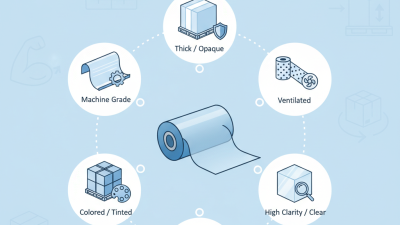
When selecting stretch film, understanding the different types available is crucial. Stretch film primarily falls into two categories: blown and cast. Blown stretch film offers higher puncture resistance due to its unique manufacturing process. It’s ideal for wrapping heavy and irregularly shaped loads. According to a report by Smithers Pira, the global demand for this type is increasing by about 4% annually.
Conversely, cast stretch film is known for its clarity and ability to cling to itself without adhesives. This transparency helps in visual inspection for warehouse operations. It is less elastic than blown film, making it suitable for lighter loads. A study published by the Flexible Packaging Association revealed that cast stretch films are favored in sectors such as food and retail, demonstrating their versatility across various applications.
Choosing the right type hinges on evaluating your specific business needs. Many companies overlook the environmental impact of stretch films. The industry is gradually moving towards biodegradable options. However, these films often come at a higher cost and may not perform as well in heavy-duty applications. Reflecting on these aspects can guide businesses in making informed decisions.
Evaluating Film Thickness: Impact on Load Stability and Cost Efficiency
Choosing the right stretch film begins with evaluating its
thickness. Film thickness directly impacts the stability of your loads during transportation and storage.
According to a report by the Flexible Packaging Association,
thicker films show enhanced resistance to punctures and tears.
For example, a 70-gauge film can sustain heavier loads compared to a 50-gauge film, ensuring better protection.
Cost efficiency is another crucial factor. Thicker films often cost more upfront but can save money in the long run.
The National Association of Containers and Pallets suggests that using a thicker film reduces the need for additional wrapping layers.
This not only lowers material costs but also enhances operational efficiency.
However, businesses should analyze specific operational requirements before overspending on thickness.
While thicker films provide benefits, they are not always necessary.
Transitioning to a thicker film without evaluating load requirements might lead to excess costs.
Businesses sometimes overlook optimal film usage, leading to waste.
Balancing thickness and expense is essential in achieving operational goals without sacrificing quality or increasing expenditure unnecessarily.
Analyzing the Importance of Stretch Ratio for Optimal Performance
When selecting stretch film, the stretch ratio is crucial. It defines how much the film can elongate and still retain its strength. A higher stretch ratio often indicates better performance, leading to cost savings. According to industry analysis, films with a stretch ratio of 300% or more can reduce material usage by 15-30%. This translates into lower costs and less waste over time.
However, achieving the optimal stretch ratio is not always straightforward. High stretch ratios can lead to issues like tearing and inadequate load stability. It is essential that businesses conduct thorough tests to find the right balance. A miscalculation might result in underperforming shipments or damaged products. In fact, nearly 30% of companies report difficulties with load containment due to improper film selection.
In addition, the right stretch ratio relies on multiple factors, such as load weight and transportation methods. Variations in these factors can impact how well the film performs. Relying solely on high stretch ratios without testing can lead to failures. Businesses must prioritize empirical testing to ensure reliability and performance.
Assessing UV Resistance and Puncture Resistance in Selected Films
When selecting stretch film for your business, assessing UV resistance and puncture resistance is crucial. UV resistance protects your products from sunlight damage. It ensures that packaged items do not degrade or lose quality over time. Understanding the specific needs of your products can help you determine the required level of UV protection.
Puncture resistance plays an equally important role. This feature prevents the film from tearing or breaking during handling and transportation. A film that can withstand sharp edges and rough treatment will save you costs on damaged goods. Evaluate different tests available that measure puncture resistance effectively.
Tips: Consider your storage and transport conditions. If your products will be exposed to sunlight, opt for films with high UV resistance. Conduct trials with various films to see which one performs best under real conditions. Don’t overlook your budget, but remember that cheaper options might compromise quality. A balance between cost and performance is essential.
Determining the Right Width and Roll Length for Your Specific Application
Choosing the right width and roll length of stretch film is crucial for your business needs. The proper width allows you to wrap pallets securely. It should accommodate the size of the most common packages you handle. If your rolls are too narrow, your wrapping will be inefficient. If they are too wide, you may end up wasting film.
When determining roll length, consider your usage frequency and volume. Shorter rolls are easier to manage but require more frequent changes. Longer rolls reduce change times, but they can be harder to handle, especially for small operations. Think about your staff's capability. Managing a longer roll can be tricky without proper training.
Different applications may require different sizes. For example, heavy machinery needs wider and thicker film for maximum support. In contrast, smaller items may only need a narrower option. Reflecting on your product range is essential. Do your current choices meet your needs efficiently? If not, it might be time to reevaluate your stretch film dimensions.
Choosing the Best Stretch Film for Your Business Needs
This chart illustrates the comparative strengths of different stretch film widths and roll lengths suitable for various applications. It helps businesses to determine the best option based on their specific packaging requirements.