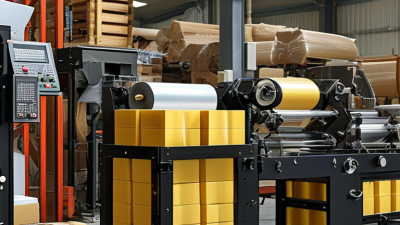
Factories and warehouses depend on reliable material handling, from moving pallets between production lines to delivering bins through busy aisles. An automated guided vehicle can make these routine movements more consistent, especially where routes are predictable and loads are clearly defined. Small details matter: floor condition, aisle width, payload, charging time, and how vehicles interact with workers. The right system should fit the operation, not simply look impressive in a product brochure.
This guide examines ten notable China-based manufacturers and the capabilities buyers may want to compare. These include vehicle types, navigation options, load capacity, integration support, safety features, and service availability. Names and rankings should not be treated as a universal verdict; requirements differ across industries, and product offerings change over time. Ask for current specifications, references from similar installations, and a clear plan for commissioning and maintenance. Details count. A technically capable supplier may still be a poor match if its support is difficult to access or its vehicles need extensive changes to work with existing equipment. There is no perfect shortlist. The comparisons ahead are intended to help readers ask sharper questions and identify candidates worth evaluating—not replace site assessments, demonstrations, or direct discussions with manufacturers.
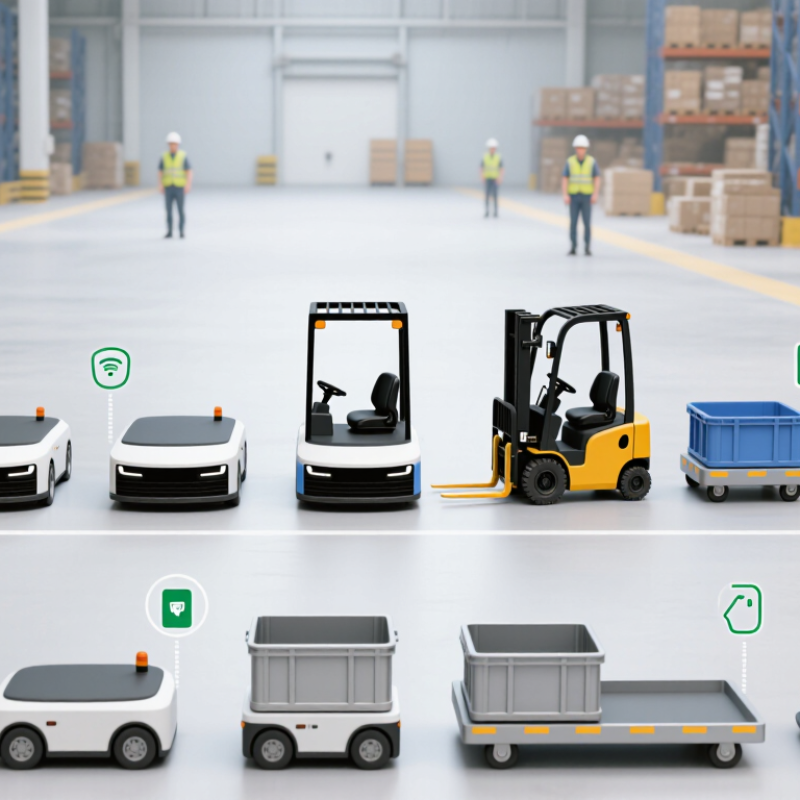
In China’s factories and distribution centers, automated guided vehicles are selected around the work, not just the floor plan. Tow vehicles pull several carts between production cells, while unit-load models carry pallets or bins. Fork-style AGVs lift loads onto racks or conveyors. Payload classes vary by supplier and design, so a “light-duty” label is not a reliable specification. A vehicle rated near 500 kilograms may suit totes, while heavier pallet applications can require several tonnes of capacity. Check the load’s dimensions, center of gravity, and stopping distance too. Small details matter.
Navigation shapes how well an AGV fits the site. Magnetic tape and floor markers offer predictable routes, but changes may require physical updates. Laser-based systems can map aisles and respond to obstacles; reflective surfaces or busy traffic can still complicate performance. Camera-based navigation may use visible features, while hybrid setups combine methods for added flexibility. Ask how the vehicle behaves when a pallet blocks its usual path. Then test it during a real shift, with people and forklifts nearby. A clean demo is useful, but it can hide awkward handoffs and dead zones. The specification sheet is only part of the decision.
The International Federation of Robotics reported 541,302 industrial robot installations worldwide in 2023. Its World Robotics 2024 report puts the global operational stock at about 4.28 million units. These figures show how deeply automation is entering factories, from welding cells to palletizing lines.
That context matters when assessing automated guided vehicle manufacturers, but the figures need careful reading. IFR’s installation total covers industrial robots, not AGVs alone. It should not be presented as a measure of AGV sales. A mobile vehicle moving a loaded cart through a warehouse solves a different task from a fixed robot on an assembly line. Still, both reflect investment in automated production and material flow.
IFR also reported global robot density of 162 units per 10,000 manufacturing employees in 2023. This average hides major regional differences, and it cannot predict demand at any single facility. Site layout, payload, aisle width, and traffic rules all affect whether an AGV is practical. Small details matter. A narrow turning point can slow an entire route. The figures make the market look straightforward, perhaps too straightforward. Buyers should compare real operating needs, not just headline growth, when reviewing the top ten manufacturers.
| Market Indicator | 2023 Data | Relevance to the AGV Market |
|---|---|---|
| Industrial robot installations worldwide | 541,302 units | Provides a global automation benchmark for the industrial environment in which AGVs and other material-handling systems are deployed. |
| Year-on-year change in global installations | Down 2% from 2022 | Indicates a slight decline in annual industrial robot installations, while automation demand remains substantial. |
| Operational industrial robot stock worldwide | Approximately 4.28 million units | The installed base reflects the scale of existing factory automation infrastructure that may need coordinated material movement. |
| Asia’s share of new installations | Approximately 70% | Asia was the largest regional market for industrial robot installations, making it an important region for assessing automation demand. |
| Europe’s share of new installations | Approximately 17% | Europe represented a significant portion of global installations and is another major region for industrial automation investment. |
| Americas’ share of new installations | Approximately 10% | The Americas accounted for about one-tenth of worldwide installations in 2023. |
| China’s industrial robot installations | 276,288 units | China was the world’s largest national market for industrial robot installations in 2023, providing relevant context for evaluating its broader factory-automation sector. |
Source: International Federation of Robotics (IFR), World Robotics 2024. Regional shares are rounded. Industrial robot installation figures describe industrial robots and should not be interpreted as AGV shipments or AGV market size.
A credible ranking of ten Chinese automated guided vehicle manufacturers should compare more than headline claims. Product range matters: compact carts for narrow aisles, pallet movers for warehouse routes, and heavier platforms for factory transfers solve different problems. Buyers should check payload limits, navigation options, charging methods, and how vehicles respond when routes become crowded. Small details count.
Scale is harder to judge from promotional language alone. Useful evidence includes production capacity, completed deployments, engineering support, and the ability to maintain fleets across multiple sites. A broad catalog may suggest capability, but it does not prove reliable delivery or long service life. That distinction matters. Rankings should separate documented experience from estimates, while recognizing that public information is uneven.
Industry reach also deserves careful treatment. Manufacturers serving logistics, electronics, automotive production, or healthcare face different layout and uptime demands. Regional service teams and integration expertise can matter as much as vehicle specifications. No single score captures every buyer’s needs. Even a well-researched ranking has limits, especially when comparable operating data is unavailable; readers should treat close positions as indicative, not definitive.
A China-focused top-ten guide to automated guided vehicle manufacturers should compare evidence, not just product claims. Each profile can explain where vehicles work: pallet movement between warehouse zones, line-side delivery, or tote transport in narrow aisles. Note the payload, navigation method, charging approach, and safety features. A low-profile vehicle may suit small loads, while heavier pallets need stable turning and clear floor conditions. Details matter.
Deployment records help readers judge whether a system has moved beyond a demonstration. Look for stated fleet size, operating hours, site layout, and integration with warehouse or production software. Records are more useful when they describe commissioning, operator training, and service response—not only installation. Yet figures are not always comparable; sites differ, and published case studies may omit downtime. Technical profiles should explain obstacle detection, route management, battery performance, and how vehicles respond when aisles become blocked.
Tips: Ask for a site assessment using real aisle widths and load dimensions. Request references from similar operations, plus maintenance intervals and recovery procedures. A polished demo is useful, but it cannot reveal every awkward corner.
Global Professional Service Robot Sales, 2023
Transportation and logistics was a major application for mobile robots. The logistics figure is part of—not additional to—the total. These global industry figures describe an application area, not sales by individual manufacturers.
Source: International Federation of Robotics (IFR), World Robotics 2024; figures rounded.
When assessing China’s top automated guided vehicle manufacturers, treat ISO 3691-4:2020 as a safety benchmark, not a guarantee of safe operation. The standard covers safety requirements and verification for driverless industrial trucks and their systems. Ask for evidence of risk assessment, emergency-stop performance, and protective-field responses. Test these functions in your own layout, especially near blind corners, pedestrian crossings, and narrow aisles. Real floors are rarely perfect.
Payload figures need context. Check the rated load, load center, travel speed, and performance during starts, stops, and turns. A vehicle carrying a heavy pallet may behave differently on a slope or uneven surface. Positioning accuracy also needs a clear definition: docking repeatability, route tracking, and final stopping tolerance are not the same measure. Test with representative loads and real floor conditions.
A clean test lane can flatter any vehicle. It is easy to overvalue a precise number; practical trials may reveal limits that a specification sheet misses.