Top 5 Heat Shrink Tunnel Solutions for Your Packaging Needs?
In the world of packaging, efficiency and reliability are paramount. One solution stands out: the heat shrink tunnel. This technology has transformed how products are packaged, ensuring that items remain secure during transport. These tunnels work by using heated air to shrink plastic film around products, providing a tight and protective seal.
Choosing the right heat shrink tunnel for your needs can be challenging. Various models offer different features, capacities, and price points. Understanding these options requires expertise in packaging technology. You may wonder which systems deliver the best performance. It's essential to evaluate their design and functionality.
Even seasoned professionals can find it tricky to select the ideal solution. Each heat shrink tunnel has its unique strengths and weaknesses. Paying attention to details such as throughput speed and maintenance is crucial. These factors can significantly impact your production line’s efficiency. Remember, the goal is to find a system that aligns perfectly with your specific packaging requirements.
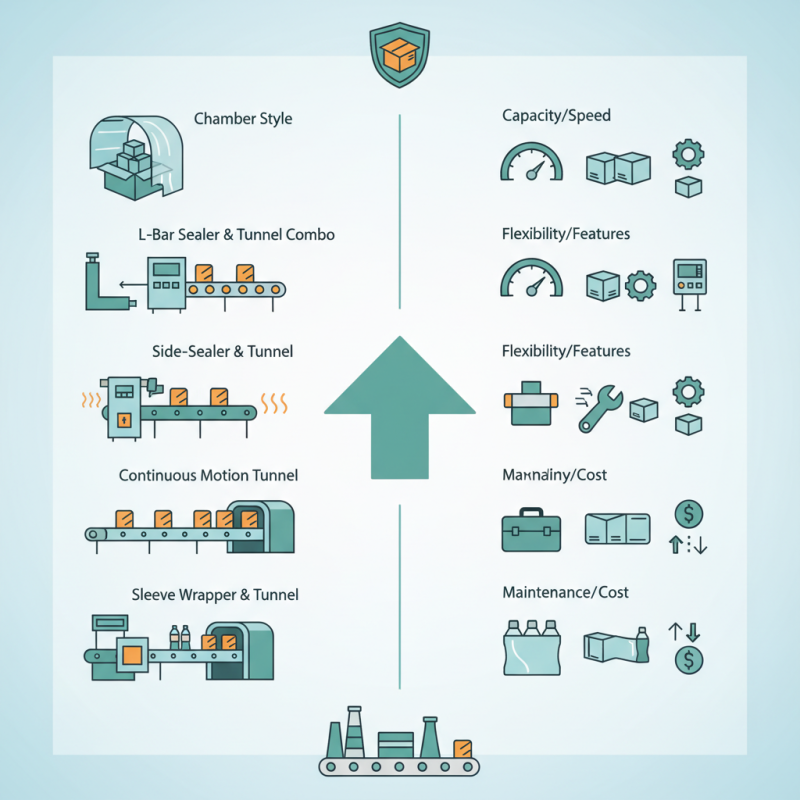
Top 5 Heat Shrink Tunnel Solutions for Efficient Packaging Operations
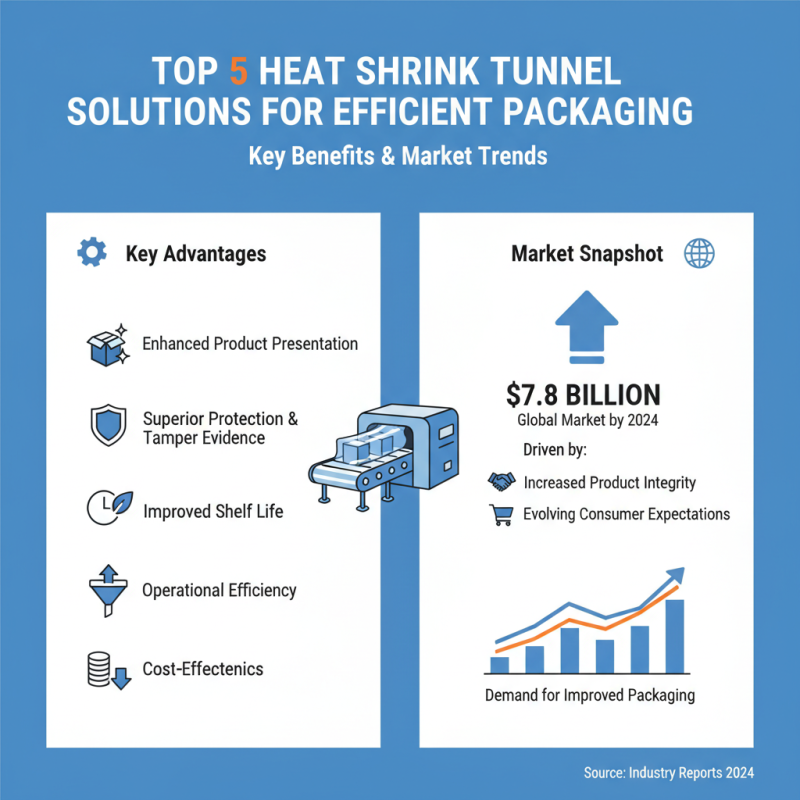
Heat shrink tunnels are crucial for efficient packaging operations. They provide a reliable solution for product presentation and protection. The global market for heat shrink packaging is projected to reach $7.8 billion by 2024, driven by the demand for improved shelf life and product integrity. Many companies are optimizing their processes to meet evolving consumer expectations.
Consider using high-efficiency heat shrink tunnels that reduce energy consumption by up to 30%. This can positively impact your overall operational costs. Regular maintenance is essential. Neglecting it may lead to unexpected downtime. Monitoring the temperature control system is crucial. Inconsistent temperatures can result in inadequate sealing, impacting product quality.
A practical tip: always test your packaging materials with your heat shrink tunnel. Variations in film type can affect shrink performance. You may encounter challenges, such as film tearing or uneven shrinking, if the wrong material is used. Continuous evaluation ensures your process remains efficient and cost-effective. Picking the right solution should balance speed, energy consumption, and overall effectiveness.
Understanding the Technology Behind Heat Shrink Tunnels in Packaging
Heat shrink tunnels are vital in modern packaging. They use heat to shrink film around products tightly. This process ensures items are secure, visible, and ready for shipment. Understanding the technology behind heat shrink tunnels helps businesses optimize their packaging needs.
A heat shrink tunnel operates by using hot air or radiation. The heat warms the plastic film, causing it to shrink and conform to the product's shape. This method protects the items from moisture and damage during transport. It also enhances the product's appearance on the shelf. Control over temperature and speed is crucial for achieving ideal results.
**Tip**: Regularly check the settings on your shrink tunnel. Even slight variations in temperature can lead to ineffective seals.
Operators must be mindful of the film type used. Different materials shrink differently. Choosing the right film can prevent common issues, like tears or loose seals. It's an area worth exploring more in depth.
**Tip**: Test various films to determine the best match for your product. This experimentation can lead to improved efficiency in your packaging line.
While heat shrink tunnels are effective, they require maintenance. Regular cleaning and inspection can prevent downtime. These simple tasks can extend the life of equipment and improve overall performance.
Top 5 Heat Shrink Tunnel Solutions for Your Packaging Needs
| Solution Type |
Tunnel Length (ft) |
Max Product Height (in) |
Temperature Range (°F) |
Production Speed (packages/min) |
| Electric Heat Tunnel |
12 |
10 |
180 - 220 |
30 |
| Gas Heated Tunnel |
14 |
12 |
200 - 250 |
40 |
| Infrared Heat Tunnel |
10 |
8 |
160 - 210 |
50 |
| Steam Heat Tunnel |
16 |
15 |
190 - 230 |
35 |
| Hybrid Heat Tunnel |
18 |
14 |
180 - 240 |
45 |
Comparative Analysis of Material Processing Speeds in Shrink Tunnel Systems
Heat shrink tunnels play a critical role in modern packaging, speeding up product wrapping while ensuring durability. Industry reports from the Packaging Machinery Manufacturers Institute highlight that processing speeds vary widely, from 10 to over 60 feet per minute. The variation depends heavily on tunnel design, heating technology, and material compatibility. For instance, polyethylene films often require slower speeds due to lower heat tolerance, while PVC shrinks faster under controlled heat.
One key factor influencing processing speed is the heat distribution mechanism inside tunnels. Infrared heating tends to deliver uniform temperature, allowing faster conveyor speeds without damaging the product. Conversely, steam tunnels, although gentle on delicate materials, often run slower to avoid uneven shrinking. Data from a recent market study show that advanced conveyor systems can increase throughput by up to 25% without compromising quality, but such gains demand precise temperature control and sealing conditions.
It's worth noting that not all packaging tasks benefit from maximum speed. Overdriving a system can cause incomplete shrinkage or film tears, leading to increased waste and downtime. Operators need to balance speed with the thermal properties of films and product shapes. While technology steadily improves, real-world performance often requires fine-tuning and careful observation. This challenge underscores the importance of choosing shrink tunnel systems with adaptable speed controls to meet diverse packaging needs.
Top 5 Heat Shrink Tunnel Solutions for Your Packaging Needs
This chart illustrates the comparative analysis of material processing speeds in different heat shrink tunnel systems, highlighting the efficiency of each solution for packaging needs.
Key Criteria for Selecting the Right Heat Shrink Tunnel for Your Needs
When selecting a heat shrink tunnel, understanding key criteria is essential. One crucial aspect is the size of your products. It’s important to choose a tunnel that accommodates the dimensions of your packaging. If the tunnel is too small, it may not fully shrink the film. Conversely, an oversized tunnel can waste energy and time.
Temperature control is another significant factor. Uniform heat distribution ensures that all parts of the package shrink evenly. Inadequate temperature can lead to wrinkles or incomplete sealing. Having adjustable temperature settings can help adapt to different materials.
Finally, consider the speed of the machine. A faster tunnel increases productivity. However, it is vital to avoid sacrificing quality for speed. An efficient heat shrink tunnel should balance both aspects, ensuring products are well-packaged while optimizing throughput.
Industry Insights: Cost-Benefit Analysis of Heat Shrink Tunnels in Production
Heat shrink tunnels are essential in today's packaging industry. They offer effective sealing for products while enhancing the visual appeal of packaging. However, integrating heat shrink tunnels into production requires careful consideration of costs and benefits. Choosing the right solution can directly impact a company's efficiency and product quality.
A cost-benefit analysis reveals that while initial investments may seem high, the long-term savings can be substantial. These systems reduce labor costs by automating the packaging process. They also increase production speed, which meets high consumer demand more effectively.
A detailed review of energy consumption is crucial. If not managed, it can lead to increased operational costs. Evaluating specific production needs is critical. Not all heat shrink tunnels are equipped for every product type or packaging material.
Some may struggle with thicker films, while others have longer heating cycles. Understanding these nuances can help prevent costly mistakes.
It's vital to monitor the efficiency of the chosen system continuously and adjust as necessary. This approach not only ensures consistency in packaging but also supports sustainability goals by minimizing waste.