
BLOG

China Top Cash Register Receipt Paper Suppliers

Choosing reliable China Top Cash Register Receipt Paper Suppliers requires more than comparing prices. Retailers need consistent thermal performance, accurate sizing, secure packaging, and dependable delivery. A receipt roll may look simple, yet its quality affects checkout speed, customer readability, and equipment maintenance. Good suppliers understand these practical pressures.

This guide examines suppliers through product experience, manufacturing capability, quality controls, and communication standards. It considers common sizes, paper weight, core dimensions, BPA-free options, printing clarity, and resistance to heat or moisture. Real purchasing details matter. A roll that jams during a busy afternoon can cost more than a slightly higher unit price.

Look closely at factory certifications, sample policies, production capacity, and export experience. Ask whether the supplier can maintain stable coating quality across large orders. Packaging also deserves attention; crushed rolls and loose cartons create unnecessary waste. Transparent suppliers should explain lead times, inspection procedures, and after-sales support without making vague promises.

There is no perfect supplier.

Some manufacturers may offer excellent pricing but limited customization. Others may communicate well yet struggle with urgent production schedules. These gaps should be tested before signing a long-term agreement. By comparing evidence rather than polished claims, buyers can identify Cash Register Receipt Paper partners that support reliable daily operations and sustainable business growth. Small checks often prevent expensive problems.
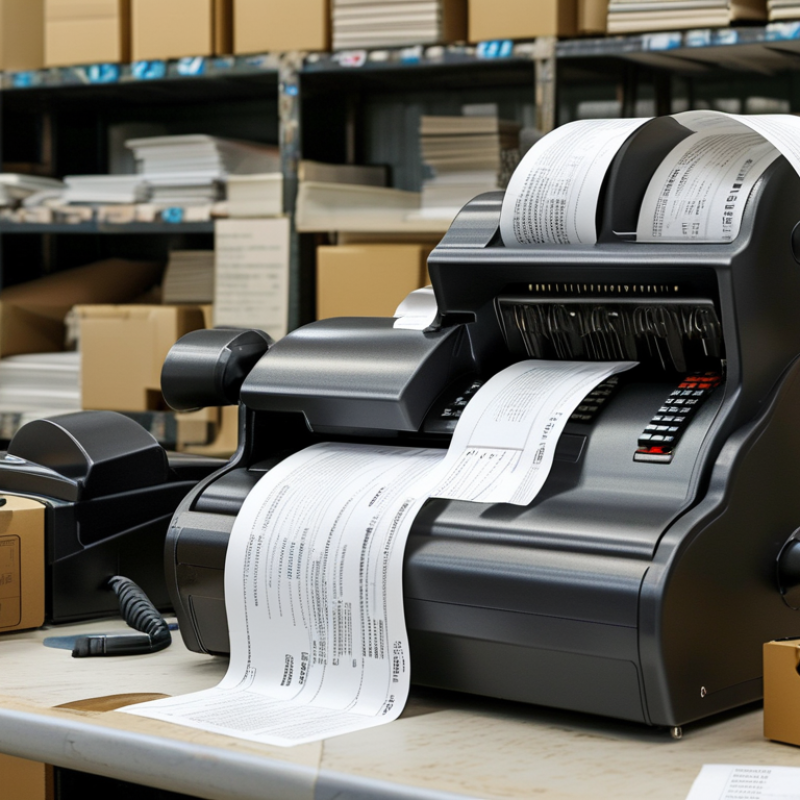
China Top Cash Register Receipt Paper Suppliers

Cash Register Receipt Paper: Types, Materials, and Essential Features

China Top Cash Register Receipt Paper Suppliers

Cash register receipt paper comes in several practical types. Thermal paper prints through heat, so it needs no ink ribbon. It produces sharp receipts quickly. Bond paper uses ink or ribbon and suits traditional receipt printers. Carbonless paper creates duplicate copies through pressure-sensitive layers. It helps when one copy stays with the customer and another supports store records.

Material choice affects daily performance. Thermal rolls usually contain a paper base, a heat-sensitive coating, and a protective top layer. Ask Chinese suppliers about coating uniformity, image stability, roll winding, and core size. Poor coating can create pale text or dark marks. Humidity may also affect storage life. I have found that width, outer diameter, and winding direction cause frequent ordering mistakes. Measure the printer, not only the old roll.

Essential features include clean cutting, low dust, smooth edges, and consistent paper weight. Phenol-free or BPA-free options may support workplace preferences, but buyers should verify current regional requirements. Recycled content can reduce material use, although it may change surface feel. Request samples and test them in real machines. Check barcode readability, fading after light exposure, and paper jams. A supplier may provide impressive specifications, yet practical testing can reveal uneven printing. That extra check is worth the time.

China’s Receipt Paper Manufacturing Industry and Supplier Landscape

China’s receipt paper industry sits within a much larger paper manufacturing base. The China Paper Association reported approximately 129.65 million tonnes of paper and paperboard production in 2023. Receipt rolls represent only a small segment, but they benefit from China’s mature coating, slitting, and converting infrastructure. Smithers’ thermal paper market analysis also identifies retail, transport, hospitality, and banking as continuing demand sectors.

The supplier landscape is highly fragmented. Large integrated mills usually control base paper and coating, while specialized converters cut jumbo rolls into 57mm, 80mm, or custom formats. A typical factory inspection should examine coating uniformity, roll tension, core strength, and barcode readability. These details matter at a checkout counter, where faded print can create delays and customer disputes. Suppliers serving export buyers commonly provide moisture-resistant packaging, pallet records, and batch traceability.

Market figures need careful reading. Some reports include label stock and ticket paper, while others measure receipt rolls alone. Therefore, published China market estimates can differ significantly. That is not necessarily poor research; the classifications are inconsistent. Buyers should request recent test reports for image stability, BPA or BPS compliance, paper weight, and winding quality. A sample may look clean on day one but fail after heat exposure. In my experience, supplier comparisons often overvalue price and overlook coating consistency. That mistake can become expensive during high-volume seasonal sales.

China Top Cash Register Receipt Paper Suppliers - China’s Receipt Paper Manufacturing Industry and Supplier Landscape

Industry Dimension Common Product or Supplier Segment Typical Specifications or Market Data Main Application Buyer Evaluation Points
Thermal receipt paper Direct thermal coated paper rolls Typical basis weight: approximately 48–80 g/m²; common roll widths include 57 mm, 58 mm, 76 mm and 80 mm. Retail cash registers, supermarkets, restaurants, kiosks and payment terminals Image density, print durability, coating uniformity, roll winding, dust level and compatibility with the printer mechanism
Non-thermal bond paper Uncoated white paper rolls for impact or ink-based printers Typical basis weight: approximately 48–70 g/m²; available in single-ply roll formats and custom widths. Legacy cash registers, accounting printers, delivery systems and transaction documentation Opacity, smoothness, moisture resistance, core dimensions and consistent paper tension during printing
Carbonless receipt paper Two-ply or three-ply pressure-sensitive paper sets Usually supplied as white/yellow or white/yellow/pink sheet combinations; thickness and ply configuration depend on the required copy count. Invoices, delivery notes, service records and handwritten transaction copies Copy image clarity, coating compatibility, ply alignment, sheet separation and storage stability
POS and payment-terminal rolls Small-diameter thermal rolls for compact devices Common formats include approximately 57–58 mm width with roll lengths selected according to outer diameter, core size and terminal clearance. Electronic payment terminals, mobile POS devices and handheld receipt printers Low-friction winding, compact roll diameter, core accuracy, clean cutting and reliable feeding
ATM and self-service rolls Longer thermal rolls with enhanced handling requirements Often produced in wider formats such as 80 mm; roll length is determined by machine capacity and service interval requirements. ATMs, ticketing machines, parking meters, vending machines and queue-management systems Long-run consistency, low paper dust, resistance to fading, splice control and machine-specific dimensional accuracy
Raw-material supply chain Base paper, thermal coating chemicals, adhesive materials and cardboard cores Manufacturing quality depends on base-paper formation, coating formulation, calendering, slitting and rewinding controls. All receipt-paper product categories Traceability, coating consistency, batch stability, moisture control and continuity of raw-material supply
Manufacturing cluster profile Paper converting and roll-processing facilities concentrated in major coastal industrial regions The Yangtze River Delta, Pearl River Delta and Bohai Rim are established Chinese manufacturing and logistics clusters with access to paper, machinery, ports and packaging services. Domestic distribution and export-oriented production Factory location, port access, production capacity, lead time, export documentation and supply-chain resilience
Customization capability Private-label rolls without displaying supplier or brand information Custom options may include width, length, outer diameter, core diameter, winding direction, carton quantity and multilingual packaging. Retail chains, distributors, wholesalers and equipment integrators Minimum order quantity, sample approval, dimensional tolerance, packaging artwork control and repeat-order consistency
Chemical compliance Phenol-free or restricted-substance thermal paper options For the European Union, thermal paper containing bisphenol A at or above 0.02% by weight has been restricted since 2 January 2020 under Commission Regulation (EU) 2016/2235. Retail, banking, public-service and export applications requiring regulatory documentation Declaration of conformity, restricted-substance testing, safety data documentation and traceable production batches
Sustainability credentials Fibre-traceable, recycled-content or responsibly sourced paper options Forest-management or chain-of-custody certifications are voluntary market credentials; recycled content and certification availability must be verified for each product specification. Corporate procurement, public tenders and environmentally focused retail programs Valid certificate scope, recycled-content percentage, packaging reduction, recyclability and supporting documentation
Quality-control checkpoints Incoming inspection, coating inspection, slitting inspection and final-roll inspection Important checks include basis weight, thickness, roll width, outer diameter, core diameter, winding tightness, print response and surface cleanliness. Bulk orders and recurring supply programs Inspection records, agreed tolerances, defect handling, retained samples and corrective-action procedures
Export and logistics factors Containerized shipment, palletized cartons and mixed-size order management Receipt rolls are sensitive to humidity, heat, pressure and prolonged direct sunlight; dry, clean and stable storage is recommended. International wholesale and distributor supply Moisture-proof packaging, carton compression strength, pallet configuration, shipping marks and production lead time
Note: Specifications shown are typical industry ranges rather than universal requirements. Final dimensions, coating chemistry, compliance status and certification claims should be confirmed against the specific product specification and test documentation.

How to Evaluate China’s Top Receipt Paper Suppliers

China Top Cash Register Receipt Paper Suppliers

How to Evaluate China’s Top Receipt Paper Suppliers

Evaluating receipt paper suppliers requires more than comparing factory prices. In purchasing work, I check paper weight, roll length, core size, and coating consistency against a written specification. A sample roll should feed smoothly through several common printers. It should not curl, shed dust, or leave dark marks on the print head. Small faults become expensive when thousands of rolls reach stores.

Ask suppliers for recent test reports and production details. Confirm whether the thermal coating supports the required storage period, especially for receipts kept in warm warehouses. Review carton strength, moisture protection, and label accuracy before approving a shipment. Experienced suppliers can explain their base paper source, coating process, slitting tolerance, and inspection frequency. Vague answers deserve another sample. Confident promises are weaker than measurable records.

Reliability also appears in communication. A capable supplier confirms artwork, core diameter, roll direction, packing quantities, and delivery dates in writing. Request a pre-shipment inspection with photos and random roll measurements. Check whether defective rolls are traced by batch number. Some evaluations miss this point. I once focused too heavily on price and overlooked uneven winding, which slowed packing operations. A fair comparison should include waste, replacement handling, and transport damage, not only the quotation.

Product Standards, Customization, and Quality Control

China Top Cash Register Receipt Paper Suppliers

Selecting a reliable receipt paper supplier requires more than comparing prices. Product standards should cover paper width, roll length, core size, thermal sensitivity, image density, and storage life. Suppliers should provide clear test records and material declarations for each production batch. In factory audits, I check whether operators measure roll diameter and winding tension regularly. Small errors can cause printer jams.

Customization is valuable for supermarkets, restaurants, pharmacies, and logistics companies. Buyers may request different roll sizes, core colors, packaging labels, or carton quantities. Private packaging can improve warehouse control without changing the paper formula. A careful supplier confirms printer compatibility before mass production. Samples should be tested in real machines, not only inspected by hand. It sounds obvious.

Quality control should continue from raw material inspection to final packing. Technicians can test thermal clarity, coating uniformity, edge smoothness, moisture resistance, and resistance to fading. Packaging also matters. Sealed cartons help protect rolls during transport and storage. Suppliers with documented inspection procedures are easier to evaluate and audit.

Still, a perfect sample can mislead. Buyers should request batch records, retention samples, and corrective-action reports. I have seen attractive rolls fail because the core was slightly loose. Price alone is a weak quality indicator. Reliable cooperation depends on measurable standards, honest communication, and repeated verification.

Ordering, Pricing, Shipping, and Supplier Verification in China

China Top Cash Register Receipt Paper Suppliers

When ordering receipt paper from China, define the roll before requesting a quote. Specify width, length, core diameter, paper weight, thermal sensitivity, and packaging. A sample roll should print clearly after heat, friction, and humidity exposure. Grand View Research estimates the global thermal paper market reached about USD 4.1 billion in 2023, with growth continuing through 2030. Demand is steady, but specifications still vary widely.

Ask suppliers for a pro forma invoice, production lead time, carton dimensions, and the agreed Incoterm. Compare pricing by usable meter, not roll count. A low price may hide shorter rolls. It happens. For shipping, confirm pallet limits, moisture protection, port options, and whether the quote includes export documentation. Freight rates can change quickly; Drewry’s World Container Index regularly records sharp weekly movements. I would leave a budget buffer.

Supplier verification needs more than a polished website. Request business registration details, recent factory videos, coating specifications, and a test report for each paper grade. Smithers’ thermal printing industry analysis identifies retail and point-of-sale applications as major demand areas, making coating consistency especially important. Test three production rolls, not only one sample. My own checks are never perfect, so I also compare batch numbers, carton labels, and independent inspection photographs before releasing the balance.

Go to Top