
Global sourcing turns a small label into a critical control point. Products may cross factories, ports, warehouses, and retail channels before reaching customers. At each step, barcode security labels must support identification, verification, and traceability without slowing operations.
GS1’s Sunrise 2027 initiative is accelerating the move toward richer, two-dimensional barcodes. These codes can connect product identifiers with batch, expiry, and verification data. The GS1 General Specifications also stress consistent data structures and reliable scanning conditions. Meanwhile, Smithers’ Future of Global Security Printing to 2028 identifies authentication, track-and-trace, and brand protection as continuing priorities for printed packaging. These findings matter during supplier selection. A visually impressive label can still fail under condensation, abrasion, curved surfaces, or weak printer calibration.
Miguel Lopera, former GS1 CEO, described the barcode as “the language of business.” That language needs protection. A suitable barcode security labels program may combine serialized codes, tamper-evident materials, covert marks, and secure data management. It should also match the product’s journey, not merely its factory environment. Ask for application testing, scan-rate evidence, adhesive performance, and documented change control. Review samples after transport simulation. Small details matter.
There is no universal label. That is the uncomfortable part. A solution optimized for cartons may perform poorly on glass, textiles, or refrigerated packaging. Global sourcing teams should compare suppliers against measurable requirements, regional operating conditions, and lifecycle costs. Independent testing adds confidence. Supplier claims alone do not.
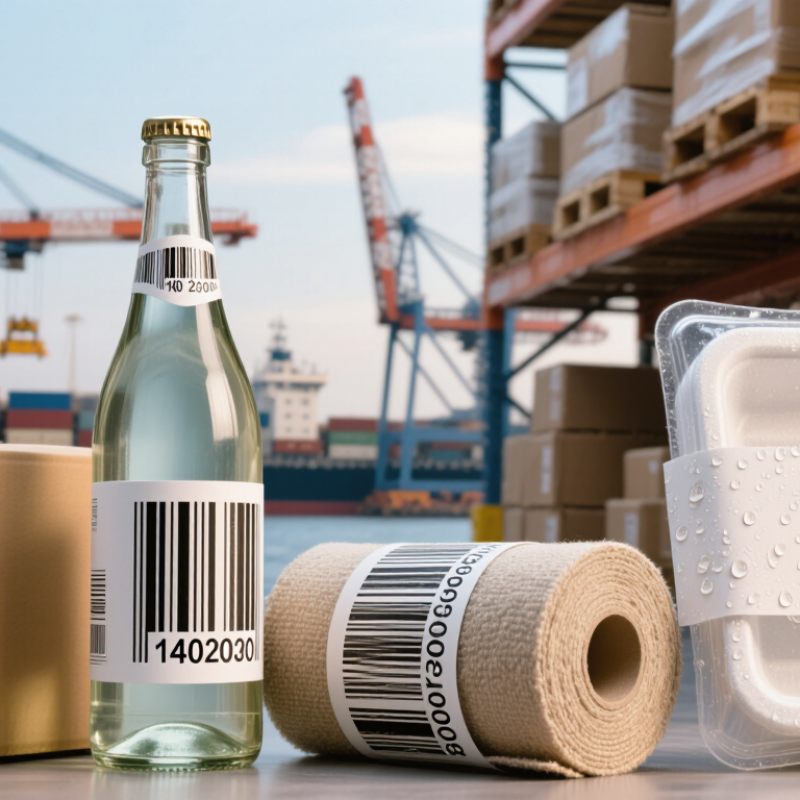
Global barcode sourcing becomes risky when teams treat the label as a simple printed sticker. In practice, labels pass through factories, freight hubs, warehouses, and retail scanners. Each handoff can expose data, damage adhesive, or create opportunities for unauthorized replacement. Define the risk before choosing materials.
Map every movement of the barcode. Ask who prints it, who approves the serial range, and who scans it. Duplicate numbers can appear through spreadsheet errors or disconnected supplier systems. A tamper-evident label may reveal peeling, but it cannot prevent copied data. Use serialized codes, restricted artwork files, and access logs together.
Conditions matter too. Test labels on cartons exposed to rain, heat, cold storage, dust, and repeated handling. Check whether scanners read faded or scratched codes at normal warehouse distance. Request samples from each production site, not only the preferred supplier. Small differences in ink, coating, and adhesive can affect performance. Details matter.
A practical sourcing review should include surprise checks and documented chain-of-custody records. Verify the first shipment manually, then compare later scans against approved records. Do not assume a successful pilot proves long-term security. It may only reflect clean test conditions. I would also question whether every control is affordable for smaller suppliers. A complex system can create new workarounds when operators cannot use it quickly. Not enough. Revisit the risks after each route, supplier change, or packaging update.
For global sourcing, choose barcode technology from the tracking task, not the label’s appearance.
Linear codes suit cartons with stable identifiers and wide scanning angles. Code 128 supports logistics data, while EAN and UPC remain practical for retail checkout. For compact products, Data Matrix or QR codes hold more information in less space. GS1’s Sunrise 2027 guidance encourages retailers to prepare for two-dimensional codes at point of sale. That shift matters when one label must connect product identity, batch data, and digital records.
Security needs another layer. Use serialized codes so each unit has a distinct identity. Add tamper-evident material when opening the package should leave visible damage. For harsh warehouses, select thermal-transfer printing, abrasion resistance, and adhesive testing across temperature changes. ISO/IEC 15415 grades two-dimensional symbols from A to F, helping buyers verify print quality before shipment. A code that scans in the factory may fail under dust, glare, or curved packaging. Test it there.
I still over-specify labels sometimes. More data is not always better. A short identifier with controlled database access can reduce exposure and scanning delays. The 2024 MHI Annual Industry Report shows strong investment in connected supply-chain technologies, but integration remains uneven across trading partners. Therefore, confirm scanner compatibility, data ownership, and verification procedures before approving a supplier. Ask for real samples, not only artwork files. White space matters. So does the adhesive.
How to Choose Barcode Security Labels for Global Sourcing?
Choosing a barcode security label involves more than selecting a strong adhesive. In sourcing projects, I have seen labels fail after shipping through humid ports and refrigerated warehouses. Material selection matters. Polyester usually resists water, abrasion, and temperature changes better than paper. Paper can suit dry indoor packaging, but it may tear during handling. Test both.
Adhesive performance depends on the package surface. Corrugated cartons, coated metal, glass, and textured plastic each require different bonding strength. A permanent adhesive may hold firmly, yet it can perform poorly on dusty or cold surfaces. Apply sample labels at the expected temperature. Then check them after vibration, condensation, and repeated handling. Small trials reveal expensive mistakes.
Tamper-resistance features should match the security risk. Destructible labels break into pieces when removed. Void patterns leave visible evidence on smooth surfaces. Slit designs can discourage peeling, but they are not perfect. A determined person may still damage the package carefully. Barcode readability also matters after printing, rubbing, and exposure to light. Use clear contrast and verify scans with the actual equipment used in warehouses. Keep material specifications, adhesive data, test results, and batch records. I would not rely on a supplier’s general claim alone. Packaging conditions change, and yesterday’s successful label may fail in a new route.
Comparison of commonly specified label constructions for logistics, asset tracking, packaging, and product authentication
| Label Construction | Typical Material | Typical Temperature Range | Adhesive Type | Tamper-Resistance Feature | Barcode Durability | Best-Fit Applications | Key Sourcing Consideration |
|---|---|---|---|---|---|---|---|
| Standard paper label | Coated paper, usually 70–90 g/m² | Approximately −20°C to 80°C | General-purpose permanent acrylic or rubber-based adhesive | Usually none; optional destructible paper layer | Good for indoor, dry handling; limited resistance to moisture, abrasion, and chemicals | Cartons, pallets, short-term inventory, retail packaging | Lowest unit cost, but confirm storage conditions and expected label life |
| Synthetic film label | Polypropylene (PP) or polyethylene (PE), typically 50–100 μm | Approximately −40°C to 100°C, depending on film and adhesive | Permanent acrylic, selected for plastic or painted surfaces | Can be combined with void, checkerboard, or destructible constructions | Very good resistance to water, tearing, and general handling | Outdoor goods, reusable containers, warehouse assets, export cartons | Specify film thickness, print method, surface energy, and required outdoor exposure |
| Polyester label | PET film, commonly 25–75 μm | Approximately −40°C to 150°C, subject to adhesive and print system | High-performance permanent acrylic | Available as destructible, tamper-evident, or surface-voiding film | Excellent resistance to abrasion, moisture, oils, and many solvents | Industrial assets, electronics, machinery, compliance and serial-number labels | Higher cost than paper; verify thermal-transfer ribbon compatibility |
| Destructible vinyl label | Brittle vinyl or brittle plastic film | Approximately −20°C to 80°C | Permanent adhesive with strong initial tack | Breaks into small pieces when removal is attempted | Good tamper indication; moderate resistance to harsh chemicals and abrasion | Warranty labels, access panels, electronics, controlled inventory | Test on the actual substrate because brittleness changes with temperature |
| Void-message film label | PET or PP face film with a patterned release layer | Approximately −40°C to 100°C | Permanent acrylic selected for the target surface | A hidden or visible “VOID,” checkerboard, or custom pattern appears after removal | Very good; message visibility is maintained when correctly specified | Product seals, cartons, service access points, shipment security | Define whether the residue should remain on the product or transfer to the label |
| Residue-free tamper-evident label | PET or PP film with a clean-release security layer | Approximately −20°C to 80°C | Engineered permanent adhesive with controlled release behavior | Visible message or pattern appears without leaving adhesive residue on the substrate | Good to excellent, depending on film and overlaminate | Consumer electronics, premium packaging, rental equipment, clean-room assets | Confirm performance on low-surface-energy plastics, powder coatings, and curved parts |
| Two-layer security label | Printed paper or film combined with a security overlay | Approximately −20°C to 80°C | Permanent acrylic or rubber-based adhesive, depending on substrate | Combines barcode identification with a separate seal, overlay, or serialized security layer | Good to excellent; overlay protects printed data from abrasion | High-value products, returns control, spare parts, regulated distribution | Coordinate barcode quiet zones, overlay transparency, and serialization requirements |
| Metalized security label | Metalized PET or foil laminate | Approximately −40°C to 120°C | High-performance acrylic adhesive | Destructible or void construction can be incorporated | Excellent resistance to light and abrasion; reflective surface requires print testing | Brand-protection features, equipment plates, high-value serialized assets | Check barcode scanner readability, contrast, anti-glare requirements, and RFID compatibility |
Global sourcing makes barcode security labels more complex than they appear. A label may pass a local scan but fail in another warehouse. Verify the required barcode symbology, print contrast, quiet zones, and grade standards before ordering. Ask suppliers for recent inspection records, not only sample images. Confirm that adhesive strength matches the surface, temperature, moisture, and handling conditions.
Tips: Scan samples with several devices. Test curved packages. Check tiny text at normal reading distance. Compare printed data with the purchase order. Record batch numbers and inspection dates. A clear audit trail supports reliable quality decisions.
Data accuracy deserves equal attention. One incorrect digit can misroute inventory or weaken traceability. Use controlled data files and require a proof approval before mass printing. Review serial ranges, country codes, dates, and human-readable text separately.
In practical inspections, teams often focus on the barcode and overlook the printed characters. That is a costly gap. I would also repeat testing after production begins, because early samples may not reflect full-batch consistency. No checklist is perfect. Suppliers can provide strong evidence, but the buyer must question unclear results. A dependable process combines international requirements, measurable print quality, and careful data verification.
When sourcing barcode security labels globally, evaluate suppliers through evidence, not polished presentations. Ask for production samples, material specifications, adhesive data, and inspection records. An experienced supplier should explain how polyester, destructible films, or tamper-evident materials perform on curved cartons and dusty surfaces. Request a live scanning test. Check readability after abrasion, moisture exposure, cold storage, and repeated handling. Quality controls should include barcode grading, print registration, adhesive checks, and batch traceability. Independent pre-shipment inspection helps when internal testing is limited. Still, paperwork cannot replace physical samples.
Compare total cost rather than the quoted unit price. Include artwork setup, tooling, packaging, freight, inspection, and possible rework. In one sourcing project, a lower label price looked attractive, but inconsistent printing caused costly relabeling. That mistake changed our supplier scorecard. We now request a pilot batch before approving volume production. Do not ignore small variations. They become expensive at scale.
Lead times need practical detail. Confirm sample approval time, production capacity, packaging schedules, and transit buffers. Ask how the supplier handles urgent changes without skipping quality checks. A written control plan should define acceptable defects, scan performance, adhesive strength, and release approvals. I still find forecasts imperfect, especially during peak shipping periods. Therefore, a modest safety stock can protect production, but excessive stock may hide weak planning. Review supplier performance monthly using delivery accuracy, defect rates, response time, and corrective-action records. Reliability is demonstrated repeatedly.