What are the Benefits of Packaging Automation Solutions?
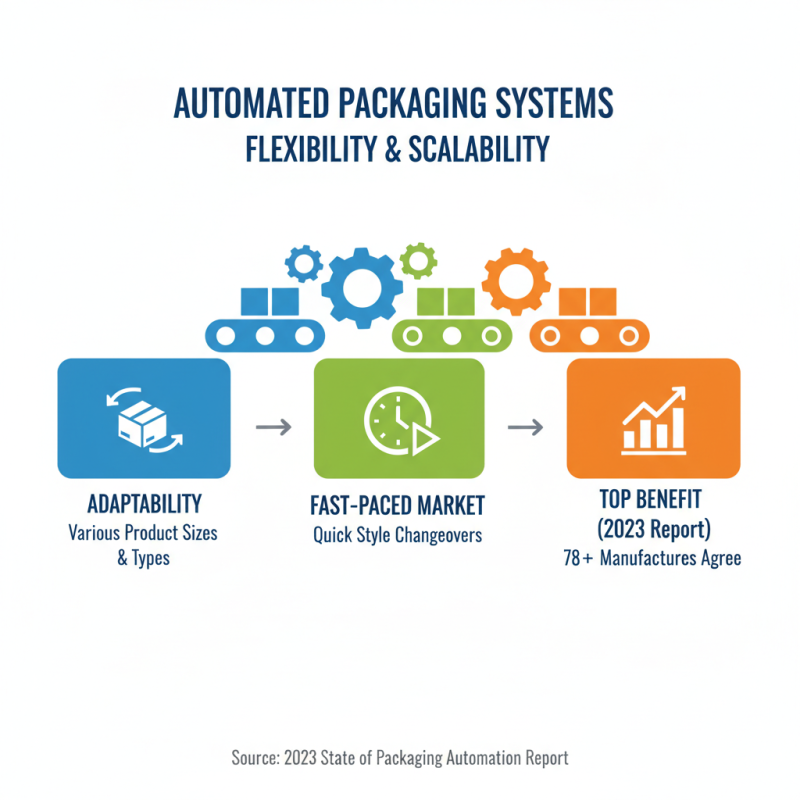
In today's fast-paced market, businesses increasingly turn to packaging automation solutions to enhance efficiency and reduce costs. A report by PMMI shows that 60% of packagers in North America have adopted automation in recent years. This shift not only optimizes operations but also meets the rising demand for speed and precision in packaging. Automation can significantly lower labor costs while improving productivity.
Expert David Thomas, a leading figure in packaging automation, emphasizes, "Automation is no longer optional; it's essential for survival in the competitive landscape." His insight reflects the growing reliance on technology to streamline packaging processes. However, the transition to automation is not without challenges. Companies must consider the upfront investment and potential disruptions to existing workflows.
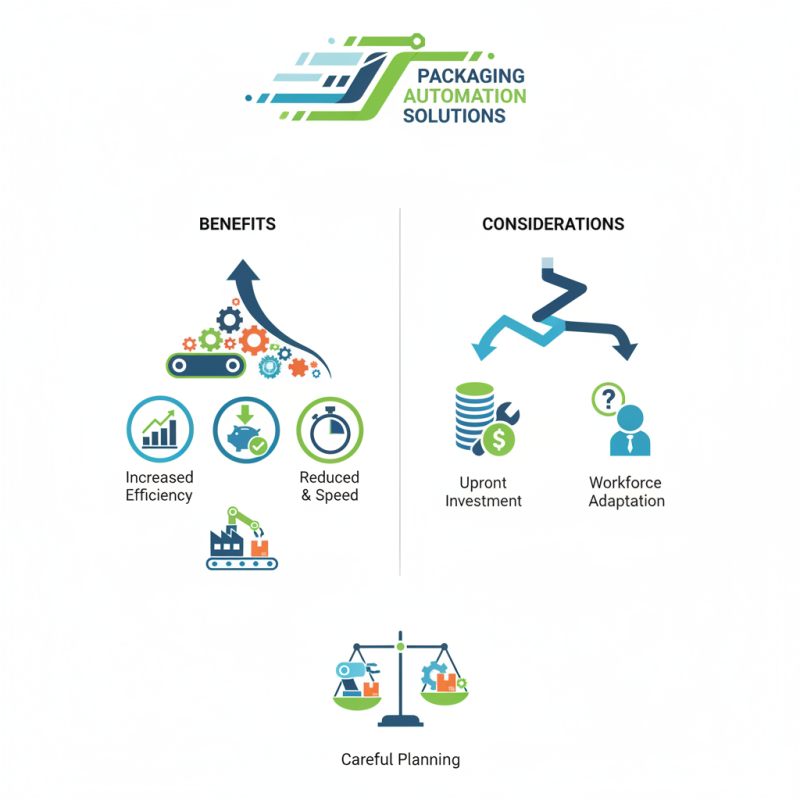
Some firms may experience resistance to technology adoption. Employees might fear job loss or lack adequate training. Addressing these concerns is crucial for a successful transition. Overall, while packaging automation solutions offer significant benefits, careful planning and consideration are necessary for effective implementation.
Advantages of Packaging Automation Solutions for Efficiency
Packaging automation solutions significantly enhance operational efficiency. They streamline processes and minimize human error. By automating repetitive tasks, companies can save time and reduce labor costs. This leads to faster production rates, enabling businesses to meet growing consumer demands.
Moreover, automation improves accuracy in packaging. Machines can precisely fill, seal, and label products with consistency. This prevents mistakes that may occur in manual handling. However, some companies may find the initial investment daunting. The transition period can also be challenging. Workers need to adapt to new technology, and this takes time.
Increased efficiency allows for better resource management. Less waste occurs when processes are automated. Accurate packaging reduces returns and enhances customer satisfaction. Nonetheless, it's essential to monitor these systems regularly. A malfunction can disrupt operations. Continuous evaluation ensures that the solutions remain effective and contribute to overall productivity.
Cost Reduction Through Packaging Automation Technologies
Packaging automation technologies have a significant impact on cost reduction for businesses. According to the Packaging Automation Industry Report, companies often report savings of up to 30% by implementing these solutions. This can include reduced labor costs and faster packaging processes. However, it's essential to consider the initial investment. Many businesses hesitate, fearing high upfront costs. Yet, these systems generally pay for themselves within a few years.
Efficiency is a key advantage here. Automated packing machines can operate at a higher speed than manual labor. They also reduce errors, leading to less waste. A study revealed that packaging errors can cost companies as much as 4% of their revenue. Investing in automation can mitigate these risks significantly.
Tip: Regularly evaluate your packaging needs. Don't rush into automation without understanding your specific requirements. Another tip: ensure that your team is trained properly. Inadequate training can lead to operational hiccups. Balancing efficiency with human oversight is crucial; over-reliance on automation may invite challenges.
Benefits of Packaging Automation Solutions
Enhancing Product Quality with Automated Packaging Solutions
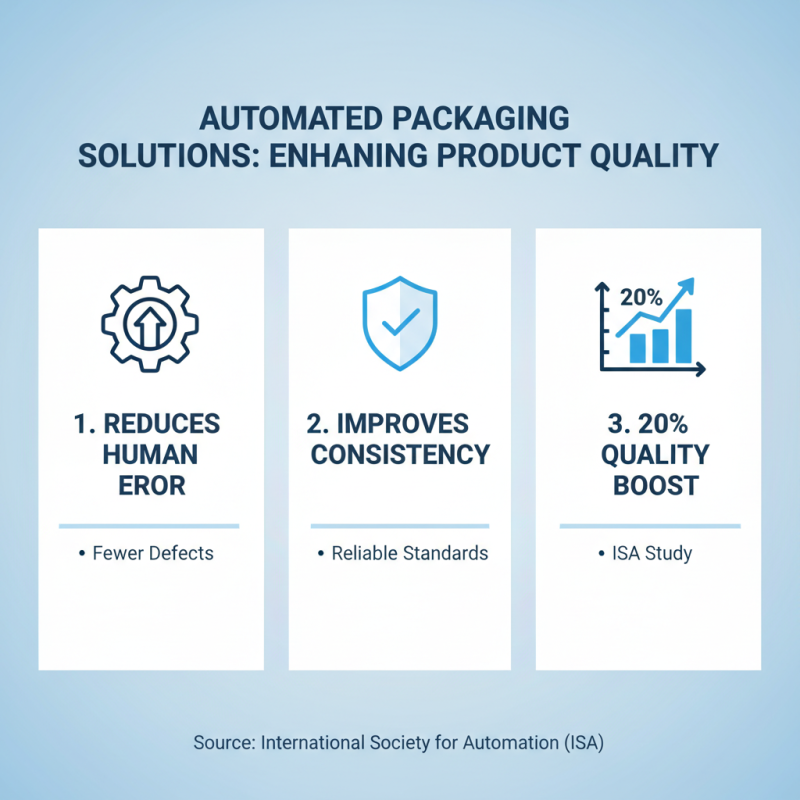
Automated packaging solutions greatly enhance product quality and consistency. A study by the International Society for Automation shows that companies implementing automation see a 20% improvement in product quality. Such systems reduce human error, which often leads to defects in packaging. Reducing variability is crucial in maintaining standards.
The precision offered by automated processes is remarkable. Machines apply uniform seals, ensuring that products remain intact during shipping. Additionally, these systems often incorporate quality control measures, detecting flaws in real-time. This technology can cut waste by up to 30%, according to the Packaging Machinery Manufacturers Institute. Waste reduction not only contributes to efficiency but also has a positive environmental impact.
However, transitioning to automation can be challenging. Companies may face initial resistance from employees. Training is needed to ensure workers understand the new systems. Budget constraints may also arise, impacting the speed of implementation. Businesses need to balance investment with potential gains as they navigate this shift. Adapting to these changes requires careful planning and a willingness to learn.
Improving Workplace Safety and Ergonomics in Packaging
In the packaging industry, safety and ergonomics are critical concerns. The Bureau of Labor Statistics reports that manual lifting and repetitive motions contribute to a high rate of workplace injuries. Poor ergonomic practices can lead to long-term musculoskeletal disorders among workers. By introducing packaging automation solutions, companies can significantly reduce these risks.
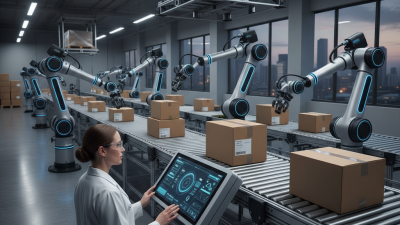
Automated systems can minimize the need for manual handling. For instance, robotic arms can lift heavy boxes, reducing strain on employees. The 2022 Industry Safety Report indicates that companies implementing such solutions saw a 40% decrease in workplace injuries. Improved ergonomic designs in automated machinery also support better posture and movement, further enhancing workplace safety.
Automation is not a one-size-fits-all solution. Some employees may feel anxious about machine interactions. Training programs are essential to address these concerns. Moreover, the transition can be overwhelming. Employees might worry about job security. It is important for managers to foster an environment that encourages open discussions and provides support during this shift.
What are the Benefits of Packaging Automation Solutions? - Improving Workplace Safety and Ergonomics in Packaging
| Benefit |
Description |
Impact on Safety |
Impact on Ergonomics |
| Reduced Manual Handling |
Automation reduces the need for workers to lift heavy packages, minimizing strain injuries. |
Lowers risk of back injuries and other musculoskeletal disorders. |
Improves overall posture and reduces fatigue during packaging tasks. |
| Increased Precision |
Automated systems ensure consistent and accurate packing, reducing errors. |
Minimizes accidents related to mispackaged goods. |
Lets workers focus on monitoring rather than repetitive tasks. |
| Workplace Organization |
Automated systems facilitate better organization of materials and workflow. |
Reduces clutter and enhances safety by minimizing trip hazards. |
Encourages a cleaner and more ergonomic working environment. |
| Enhanced Speed |
Automation increases the speed of packaging operations. |
Reduces the pressure on workers, minimizing stress-related injuries. |
Allows employees to engage in more varied and less physically demanding tasks. |
| Health Monitoring |
Automated systems can track metrics related to worker performance and health. |
Proactive approach to identifying potential safety issues before they become problems. |
Helps in assessing ergonomic risks and making necessary adjustments. |